Get Full Government Meeting Transcripts, Videos, & Alerts Forever!
Get email alerts on the Infrastructure Eir topic
No spam. Unsubscribe anytime.
Planning Commission unanimously certifies Final EIR for SFPUC Crystal Springs Bypass Tunnel after extensive public comment
Summary
After multi-hour public testimony from local agencies, unions, homeowners and utilities, the Planning Commission certified the Final EIR for the SFPUC Crystal Springs Bypass Tunnel (case 2003.0655E). Commissioners acknowledged unavoidable construction noise and visual impacts but accepted mitigation measures and monitoring programs and voted unanimously to certify.
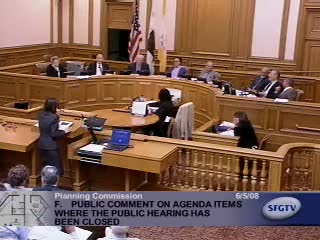
The Planning Commission on June 5 unanimously certified the Final Environmental Impact Report (EIR) for the San Francisco Public Utilities Commission’s Crystal Springs Bypass Tunnel, a critical piece of the Hetch Hetchy regional water system. Planning staff and SFPUC presenters reviewed the EIR and the project’s objectives — increasing seismic reliability and protecting regional water delivery — and explained that the project team analyzed multiple alternatives and identified mitigation to reduce impacts related to noise, vibration, dust, air quality and slope stability.
Public comment on the EIR was extensive and divided. Supporters included San Mateo County officials, regional water agencies, the Building Trades Council and unions, and several water districts and municipalities that said the tunnel is essential to maintain water service and fire-suppression capacity in a major seismic event. Opponents — including local homeowners and associations — raised concerns about 24-hour tunneling during a nine-month phase, potential violation of local noise ordinances, impacts on nearby residents, traffic disruptions and whether alternatives had been adequately considered.
Planning staff explained that while some construction noise increases would be significant and unavoidable at certain locations (using conservative thresholds because the project area is quiet), the EIR contains performance standards and monitoring requirements to limit impacts and a 24-hour SFPUC liaison and construction-management approach. Staff and PUC described a construction schedule of roughly 36 months with a nine-month period of continuous tunneling operations and emphasized mitigation, monitoring and a community notification program. The staff recommendation concluded that the EIR adequately addressed comments and that no new substantial evidence warranted changing conclusions.
On a roll-call vote the commission certified the Final EIR (Commissioners Antonini, Bill Lee, Miguel, Seguaya and Olague voted Aye). No commissioner recorded a dissent on the certification vote.
What’s next: Certification clears the environmental hurdle so the SFPUC can proceed to implement procurement and construction under the mitigation and monitoring framework described in the Final EIR.