Get Full Government Meeting Transcripts, Videos, & Alerts Forever!
Get email alerts on the Institutional Master Plan topic
No spam. Unsubscribe anytime.
Planning Commission presses Academy of Art on incomplete institutional master plan and transportation review
Summary
The Planning Commission held an extensive informational session on the Academy of Art University’s Institutional Master Plan (IMP), with commissioners and residents raising concerns about missing transportation analysis, potential housing displacement from acquisitions, and likely need for a comprehensive EIR before the IMP can be accepted.
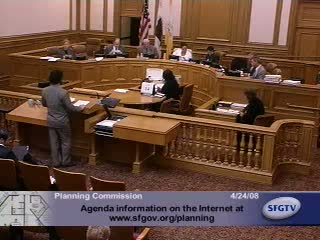
The San Francisco Planning Commission spent most of its April 24 meeting examining the Academy of Art University’s Institutional Master Plan (IMP) and its pending environmental review. Staff said the academy’s latest submission meets many code checklist items but lacks a transportation analysis, which staff and several commissioners said is essential and may push the environmental review into an 18–24 month EIR process.
Commissioners and dozens of neighborhood speakers questioned the IMP’s scope and the university’s growth strategy. Several critics said the academy has bought dozens of downtown buildings used for housing and is “cannibalizing” rental stock. Brad Paul urged the city to consider a housing fee or caps on acquisitions; public commenters and commissioners repeatedly raised concerns about how scattered acquisitions and ad hoc conversions affect housing availability and neighborhood quality of life.
Academy representative Michael Burke defended the institution’s academic mission and said the school provides housing and campus services to a constituency tied to San Francisco’s commercial art economy. Burke said the university is exploring more integrated housing options and working with city offices and neighborhood groups. "We are trying to provide housing in a dormitory environment and work with the city and supervisors to find solutions," Burke said.
Planning staff told commissioners the IMP as submitted is informational but incomplete without the transportation study; staff said the city has accepted informational IMPs in the past but that the academy’s opportunistic pattern of property acquisition increases the importance of a robust EIR. The department advised the commission that, absent a completed EIR and a more fully developed physical plan showing how students would move between facilities, the commission should not accept the IMP as final.
Several commissioners pressed staff and the city attorney for options to manage the interim period while environmental review proceeds: whether the city can set a “virtual footprint,” impose interim controls, or require the academy to notify the city before new acquisitions. Staff said many of those measures would require legal analysis and that the commission could explore interim resolutions with the city attorney.
The commission directed staff to continue working with the academy, the mayor’s office and the city attorney, pursue a transportation analysis that meets the commission’s expectations, and report back with options for interim controls and a schedule for environmental review. Commissioners emphasized that individual projects related to the IMP should not be considered final until environmental clearance and a finalized institutional plan are in place.