Get Full Government Meeting Transcripts, Videos, & Alerts Forever!
Get email alerts on the Accessibility topic
No spam. Unsubscribe anytime.
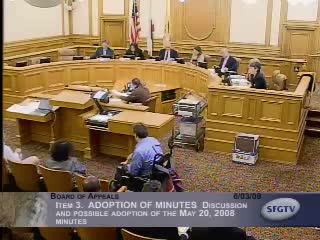
Mayor—s Office on Disability briefs Board of Appeals on ADA obligations for public meetings
Summary
San Francisco—s Mayor—s Office on Disability and the City Attorney—s Office gave a 15-minute briefing to the Board of Appeals on Title II of the Americans with Disabilities Act, focusing on reasonable modifications, communication access (captioning, ASL), and maintenance of accessible features such as the City Hall lift.
Susan Misner, director of the Mayor—s Office on Disability, and Miriam Morley of the City Attorney—s Office told the Board of Appeals on June 3 that Title II of the Americans with Disabilities Act requires state and local entities to make programs, services and activities accessible to people with disabilities. The presentation outlined how reasonable modifications and the limited defense of "fundamental alteration" apply to municipal permitting and hearings.
The presenters said the ADA imposes affirmative obligations distinct from other civil-rights laws. "The ADA has an affirmative obligation ... to provide reasonable modifications," Misner said, and Morley explained that a modification need not be provided only when it would result in a fundamental alteration, such as imposing personal-care duties on a taxi driver. They cited examples relevant to board appeals, including requests for ramps or parking variances tied to mobility impairments and when departments might need to accommodate unusual needs.
Commissioners asked about practical issues the board encounters. Panelists addressed maintenance of accessible features at City Hall, noting the front entrance lift is a common source of complaints because lifts tend to break down; Misner said there are four accessible entrances but maintenance of those features is required. They also emphasized communication access: captioning, ASL on request and materials in alternative formats. "Captioning is really crucial," Misner said, noting it helps not only people with hearing disabilities but also participants for whom English is not a first language.
The speakers provided a practice case and discussed how the board should evaluate requests tied to disability: first verify the disability, then assess the relationship between the request and the limitation, and finally weigh neighborhood impacts and safety. They supplied handouts and resources and offered to follow up with the board on questions about meetings and accessibility.
The briefing concluded with questions and a brief back-and-forth about captioning and meeting accommodations. The board received the materials and moved on to the appeals portion of its agenda.