Get Full Government Meeting Transcripts, Videos, & Alerts Forever!
Get email alerts on the Budget topic
No spam. Unsubscribe anytime.
Planning Department details $6.7 million shortfall, proposes growth-management dialogue and tech upgrades
Summary
Planning Department director presented an initial budget proposal citing a $229 million city deficit and a departmental shortfall of about $6.7 million; staff urged fee changes, increased cost recovery, improved permit tracking and a year-long public dialogue on growth management.
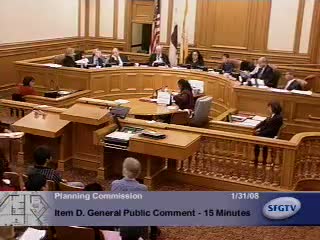
The San Francisco Planning Department on Jan. 31 told the Planning Commission it faces a sizeable budget gap and is proposing a mix of policy and technical changes to close it.
Director Ram, in his first month on the job, outlined four priorities for the coming budget year: sponsor a community dialogue on growth management, continue a process-improvement study, strengthen communications (including a public information officer and better web content) and invest in technology, notably a modern permit-tracking system and three-dimensional modeling tools. "We need a community dialogue about a growth management strategy for the city," Director Ram said during the department—s budget briefing.
Deputy director Elaine Forbes told commissioners the city is projecting a $229,000,000 starting shortfall next fiscal year and that the department—s internal projection, taking into account lost one-time grants and other factors, amounts to a roughly $6,700,000 deficit for the department. Forbes said some of the solutions under consideration include raising or restructuring fees, charging for services that are now subsidized, increasing recovery from citywide planning programs and adding an IT surcharge to pay for the permit-tracking upgrade. "We're looking at about a $6,700,000 shortfall," Forbes told the commission.
Commissioners pressed staff on specific revenue levers and operational detail. Commissioner Antonini asked whether discretionary-review and appeal fees could be raised; Forbes explained the department already uses a two-rate approach and that some mandatory reviews recover most costs while certain appeal fees remain intentionally low to preserve access. Commissioners also questioned whether any new permit-tracking system would integrate with the Department of Building Inspection; staff said they are exploring both an internal system and options that can interoperate with DBI.
Why it matters: the department—s proposals would affect project applicants, neighborhood outreach and how quickly projects move through the pipeline. Measures that increase fee recovery could shift costs to developers and applicants; technology and process improvements aim to speed review times and improve public access to project information.
What comes next: staff told the commission they will return with more detailed cost estimates and program-level proposals at the February 14 budget hearing and additional discussions on technical options in subsequent meetings.