Get Full Government Meeting Transcripts, Videos, & Alerts Forever!
Get email alerts on the West Soma Flower Mart topic
No spam. Unsubscribe anytime.
Western SoMa task force, tenants and Academy of Art clash as commission weighs limits on institutional uses
Summary
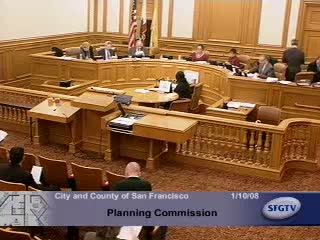
The Planning Commission debated amendments to Industrial Protection Zone policies after a contentious public debate over the Academy of Art University’s purchases at the Flower Mart. Task force and tenants urged prohibiting institutional uses in SLI to protect Production/Distribution/Repair jobs and the Flower Mart; AAU counsel said the university aims to accommodate current wholesalers. The commission agreed to narrow policy language and pursue discretionary review.
The Planning Commission opened a lengthy policy discussion about institutional uses and protections for the Service Arts & Light Industrial (SLI) area in Western SoMa after sustained public comment about the future of the historic Flower Mart. Scott Sanchez of Planning Department staff and representatives of the Western SoMa Task Force urged the commission to tighten protections to preserve job‑producing PDR uses and the flower market’s wholesale activity.
Jim Micco (Western SoMa Task Force) described a task‑force recommendation to disallow institutional uses in the SLI, and community speakers — vendors, tenants and labor and arts advocates — urged mandatory public hearings and an SUD focused on the Flower Mart to prevent displacement. Sue Hester, representing Flower Mart tenants, explicitly urged making a change of institutional use in the SLI a mandatory discretionary hearing so that proposals receive full public scrutiny.
Michael Burke, counsel appearing for the Academy of Art University (AAU), said the university plans to work with current tenants and that the Academy’s purchase could retain wholesale tenants; he asserted AAU’s intention to accommodate vendors and to meet with the Mayor’s Office and city staff to attempt a negotiated solution. Burke said the Academy has engaged neighborhood outreach and hired a mediator and promised to pursue a path that would allow wholesalers who wish to stay to do so.
Commission discussion focused on two principal regulatory paths: (1) adopting an SUD around the Flower Mart to prohibit institutional uses there and (2) amending Planning Commission Resolution 16,202 and planning code policies to require discretionary review (conditional use) for institutional/educational conversions across the IPZ. Staff described options to narrow the definition of “institutional” to educational facilities and to target amendments to reduce unintended consequences.
Several commissioners said their priority was preserving current wholesale tenants and preventing near‑term evictions; others warned about the risks of broad, city‑wide prohibitions that could unintentionally block other desirable uses. Commissioners asked staff to prepare tighter language that focuses on educational/institutional uses (including definitions from planning code sections 890.5 and 217 as applicable), evaluate an SUD for the Flower Mart, and coordinate with the Board of Supervisors and the existing interim moratorium.
The commission directed staff to refine the proposed policy language and said the Board of Supervisors was already considering parallel moratorium measures. No final ordinance or resolution vote was recorded during this session — staff will return with narrowed definitions and recommended drafting language.