Get Full Government Meeting Transcripts, Videos, & Alerts Forever!
Get email alerts on the Appeals And Findings topic
No spam. Unsubscribe anytime.
Board denies rehearing requests and adopts amended findings in Golden Gate appeals
Summary
The Board of Appeals denied rehearing requests in multiple permit appeals (including 442 Haight and 1960 Golden Gate) and adopted amended findings to revoke the 1980 Golden Gate permit after negotiated edits; votes required by board rules determined outcomes.
The Board of Appeals addressed several rehearing requests and findings related to building and land‑use permits.
On a rehearing request for the Haight Street medical cannabis dispensary matter (appeal O8‑104), the City Attorney and Planning Department staff advised the board that the building/land‑use permit was properly before the board and distinct from operational health permits. After public comment, the board voted 4‑1 to deny the rehearing request.
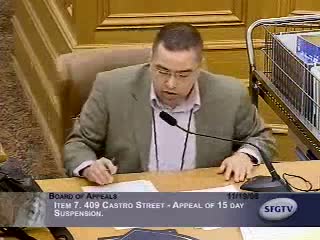
A contested rehearing request for 1960 Golden Gate Avenue, involving disputed easement and alleged misrepresentations tied to removal of a back deck and fire escape, drew extended testimony from tenants and property counsel. Appellants alleged fraud and said the board should pause until public records and audio were available; owner counsel said no new evidence had been presented and urged denial. Commissioners debated the narrow standard for rehearing, the potential effect on tenant remedies, and whether a site visit was necessary. The board denied the rehearing request by a 3‑2 vote.
The board then reviewed proposed findings in the related 1980 Golden Gate permit revocation case. Deputy City Attorney Barnes read proposed edits (correcting appeal numbers, removing stray template language, inserting the wood‑decay specialist name Kevin Flynn and striking an "unclean hands" phrase). After argument from both sides and public comment, the board adopted the findings with the agreed amendments by a 4‑1 vote.
Why this matters: The rulings affirm the board's narrow standard for rehearing while showing how findings may be edited on the record to address procedural or factual drafting errors. Parties were advised of the record and available judicial remedies where applicable.