Get Full Government Meeting Transcripts, Videos, & Alerts Forever!
Get email alerts on the Hospital Planning topic
No spam. Unsubscribe anytime.
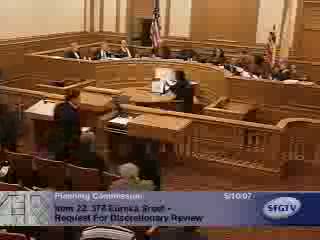
SFGH—s institutional master-plan update draws large neighborhood turnout over proposed helipad
Summary
San Francisco General Hospital presented an interim Institutional Master Plan update May 10, including a proposed rooftop helipad, generator upgrades and a long-term new hospital to meet seismic standards under SB 1953. Hospital leaders argued patient-access and seismic compliance; neighbors and community groups voiced broad opposition to the helipad on safety, noise and disaster-planning grounds.
San Francisco General Hospital presented an interim Institutional Master Plan update on May 10 outlining future projects that include a rooftop helipad, emergency-generator upgrades and a new seismically compliant acute-care hospital required under California Senate Bill 1953.
Hospital officials said the helipad and the broader rebuild are driven by patient-safety and regulatory imperatives. "We are under the mandate of Senate Bill 1953 to replace all acute care services in noncompliant structures," said Ron Alameda (department representative) and CEO Jean O'Connell emphasized that SFGH is the County—s only level-1 trauma center and a critical safety-net resource.
Planning staff has opened environmental review for the helipad; a draft EIR was expected in July. The hospital said the helipad feasibility study showed rooftop installation is structurally possible and that upgraded emergency generators are needed after several near-failures.
The helipad proposal drew extensive public testimony. Emergency-services clinicians, EMS and trauma leaders told the commission air access can expand regional surge capacity and speed transfers in high-acuity cases. San Francisco Fire Department EMS chief Pete Howes testified that the city—s trauma network and disaster-planning role make improved air transport an important capability.
Neighborhood speakers, parents and school representatives raised strong objections to a rooftop helipad in a dense, primarily wood-frame neighborhood. Concerns included helicopter noise, night flights, risks of accidents and fuel dumps, and the presence of an approved helipad proposal at UCSF Mission Bay. "A helipad on top of a non-earthquake-safe building would most likely not be able to be used in the event of an earthquake," said a representative of East Mission Improvement Association in a submitted resolution opposing the helipad.
Neighbors supplied safety citations and crash statistics and urged the city to prioritize ground-based surge planning, distributed disaster landing sites and improvements to hospital capacity rather than build additional helipads. Teachers and health professionals cited research connecting aircraft noise with cognitive and learning impacts for children and urged careful EIR analysis.
Planning staff reiterated that the IMP update is informational and does not approve any project. The helipad and the new hospital will each require separate environmental review, technical analysis and public hearings. Several commissioners said the record raised substantial policy questions that warrant a detailed EIR and cross-agency coordination.
The commission took no final action on the IMP update at this meeting; public testimony will be part of the helipad EIR record once the draft is released. Hospital leaders said they will return with detailed design and technical analyses, and staff said it will seek a draft EIR later in the summer.