Get Full Government Meeting Transcripts, Videos, & Alerts Forever!
Get email alerts on the Health Planning topic
No spam. Unsubscribe anytime.
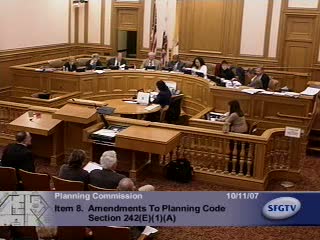
Planning commission backs health-planner review for hospital master plans after contentious debate
Summary
The commission voted to recommend code changes that would require Department of Public Health review (via a contracted health planner) of certain Institutional Master Plan changes affecting inpatient services, while clarifying thresholds, submittal formats and notice periods; hospitals objected, saying the city lacks legitimate health planning authority.
The Planning Commission voted to recommend amendments to the institutional master plan section of the Planning Code that would add a Department of Public Health review by a contracted health planner for medical-institution master plans that involve changes to inpatient services, and that would clarify thresholds, update intervals and submittal formats.
Planning staff framed the change as an update to a 1976 process to address modern medical-institution issues, remove references to the defunct West Bay Health System Agency, and improve public access to institutional plans through electronic submittal and clearer thresholds (new abbreviated IMP threshold at 50,000 square feet; a higher downtown threshold of 100,000 for C3 zoning). The proposal also clarifies when a new full IMP is required (significant revisions such as new facilities, closures, or 10,000 sq ft/25% size increases) and shortens the minimum wait period between an IMP hearing and subsequent entitlements from six to three months.
Supervisor Sophie Maxwell’s office and the Department of Public Health supported the amendment; John Lyle (Supervisor Maxwell’s office) said the measure is intended to inject objective health-planning analysis into existing Planning Code procedures that already require institutional master plans. Health Department staff said they would contract out health-planning review as needed and that the measure would fund that review through applicant fees.
Hospital and provider groups pushed back. Ron Smith of the Hospital Council and other hospital representatives argued the city lacks authority to make systemwide health policy and warned the measure could create new costs and regulatory uncertainty for institutions already subject to state oversight and seismic upgrade mandates. Some providers said the city should develop an explicit citywide needs assessment before imposing review criteria. The Health Commission and several patient and neighborhood representatives urged the commission to strengthen public access and oversight and to ensure the health planner’s analysis is presented to the Health Commission.
After extended debate — including discussion of scope, the Health Commission’s role, applicant fees to fund DPH review, and whether the measure would affect existing projects — the commission voted 4–3 in favor of recommending the amendments with staff-proposed modifications. Commissioners voting in favor said the change will provide useful, objective health analysis to inform land-use decisions; opponents warned of unintended process burdens and legal challenges. The commission instructed staff to forward a recommendation to the Board of Supervisors.
The code changes are advisory to the Board of Supervisors; they do not grant land-use approval authority to DPH. The planning department will prepare the committee’s recommended language and technical findings for the Supervisors’ consideration.