Get Full Government Meeting Transcripts, Videos, & Alerts Forever!
Get email alerts on the Residential Care Facility topic
No spam. Unsubscribe anytime.
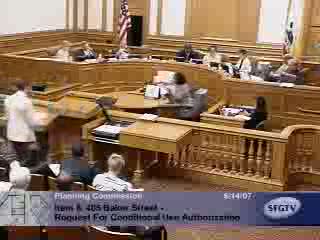
Planning Commission approves conditional use for residential care facility at 405 Baker Street, 6–1
Summary
The Planning Commission approved a conditional use permit to reopen a vacant residential care facility at 405 Baker Street to serve about 15 adults with mental disabilities; commissioners debated resident safety, notice and program operations before a 6–1 vote.
The San Francisco Planning Commission on June 14 approved a conditional use permit to convert the vacant building at 405 Baker Street into a residential care facility for roughly 15 adults with mental disabilities, voting 6–1 after public comment and a staff recommendation.
The project, presented by Planning Department staff, would adapt a building previously used as a residential care facility with only minor interior modifications and no expansion of the building envelope. Aaron Star of the Planning Department told the commission the proposal meets planning code and general plan policies and recommended approval with conditions.
During public comment, neighbor Johanna Hague said notice was inadequate and argued the planned use posed risks to nearby children and elderly residents, asking for independent clinical review and better notice to properties within 300 feet. "A mental health institution in a residential neighborhood constitutes an unacceptable threat of violence, unrest, or disturbance," Hague said, urging a more in‑depth analysis and improved communication.
Steve Fields, executive director of Progress Foundation, which would operate the facility, described prior outreach and the organization's track record. Fields said staff had mailed notices within a 300‑foot radius, hand‑delivered letters where possible, held a community meeting and received letters of support from immediate neighbors and a local meditation center. He said the facility would serve San Francisco residents discharged from higher‑level institutions and operate a structured, 24‑hour program; by contract they cannot accept certain offenders within a statutory buffer zone. "We have been good neighbors," Fields said, noting Progress Foundation has operated multiple similar programs in the city since 1969.
Commissioners questioned the sponsor about levels of supervision, client profiles and program operations, including whether clients come from locked facilities and how the program would respond if a resident left without notice. Fields said most referrals come from San Francisco General’s inpatient unit and related long‑term placements; stays average seven to eight months with a maximum of about one year. He added that the program is voluntary and that staff would file missing‑person reports if residents fail to return from planned activities.
Commissioner O’Malley moved to find the use necessary and desirable and to approve the conditional use with conditions; the motion passed on a roll call vote of 6–1, with President Alexander voting no. The commission recorded the conditions attached to the approval; staff will return with any required follow‑up materials.
The commission’s action allows Progress Foundation to proceed with permitting steps subject to the permit conditions recorded in the project file.