Get Full Government Meeting Transcripts, Videos, & Alerts Forever!
Get email alerts on the Water Infrastructure topic
No spam. Unsubscribe anytime.
SFPUC lays out $4.3 billion plan to seismically upgrade regional water system; planning commission to take comments on PEIR
Summary
SFPUC and City planning staff presented the draft program environmental impact report for a city-led Water System Improvement Program aiming to harden reservoirs, pipelines and tunnels against major earthquakes, including a proposed Calaveras Dam replacement and a southern-bay tunnel. Environmental groups urged tighter analysis of proposed Tuolumne River diversions.
San Francisco Public Utilities Commission officials presented commissioners and the public with a detailed outline of the Water System Improvement Program and the Planning Department’s draft Program Environmental Impact Report, emphasizing seismic reliability and system-wide repairs. Susan Leal, SFPUC general manager, said the presentation was an opportunity to explain how the regional system works and why a coordinated program is necessary. Tony Irons, SFPUC deputy general manager, described program goals and a design basis for projects that aim, after a major quake, to restore basic water service within 24 hours and full service within 30 days.
The program that the PUC and planning staff brought forward bundles roughly 77 projects including pipeline rehabilitation, a new Calaveras Dam just downstream of the existing structure, a transmission tunnel across the southern reach of the bay, and upgrades to the San Joaquin pipeline system. Irons said the program is “the largest capital undertaking the city has ever endeavored,” and staff estimated the total program cost at roughly $4.3 billion. Project components singled out during the presentation included crossovers and bypasses for the 3-bore San Joaquin conveyance, a fourth Alameda siphon, a new Irvington/peninsula tunnel, and dam work at Calaveras to restore lost capacity.
Planning Department staff told the commission the draft PEIR is organized into four volumes: program summary and findings, facility-level effects, water-supply strategy impacts, and mitigation/growth-inducement analysis. The PEIR evaluates alternatives ranging from a no-program option to variations emphasizing conservation, recycled water and different diversion/operations strategies. The department’s analysis finds many construction and operational impacts could be reduced to “less than significant” with mitigation measures but also identifies significant impacts tied to changes in reservoir operations and incremental diversions from the Tuolumne River.
Environmental and regional water stakeholders used the commission’s public comment period to praise the seismic work but press planning staff to strengthen the analysis of proposed diversions. Peter Drechmeier of the Tuolumne River Trust called attention to modeling gaps and a lack of up-to-date baseline biological studies in the Tuolumne watershed. Art Jensen of the Bay Area Water Supply and Conservation Agency urged more emphasis on the environmentally preferable alternative and on regional conservation and recycling commitments. The Sierra Club and others recommended removing the proposed 25 million gallons-per-day diversion increase from the draft program until more baseline data and mitigations are in place.
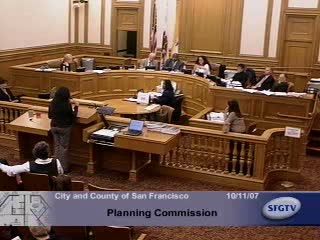
Planning staff reminded the commission and the public that the PEIR public comment period remains open through Oct. 15, 2007, and that proceedings from the PUC’s and planning’s outreach hearings will inform the comment-and-response document that accompanies certification. Next procedural steps include submission of written comments and continued agency coordination on mitigation and alternatives analysis. The Planning Commission took public testimony and left the formal environmental review process open for written comment through the posted deadline.
The commission did not take a policy vote on the PEIR itself at this hearing; the staff’s materials and public remarks will be part of the administrative record as the review continues.