Get Full Government Meeting Transcripts, Videos, & Alerts Forever!
Get email alerts on the Noe Valley Condo topic
No spam. Unsubscribe anytime.
Commission denies request to convert six unsold senior condos into five market-rate units in Noe Valley
Summary
A Planning Commission request to modify a prior conditional-use approval that would remove the senior occupancy restriction for six condominiums and convert them into five market-rate units was denied after neighbors said the developer had promised senior units and marketing evidence was unclear.
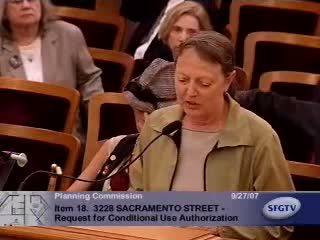
San Francisco — The Planning Commission denied a request to modify a previously approved conditional use that authorized six senior-occupancy units at a Noe Valley site after hearing conflicting testimony about marketing efforts and neighborhood expectations.
Elizabeth Waddie of the Planning Department presented the sponsor’s request, explaining that the developer said it had been unable to sell any of the six units marketed to seniors since the building was completed in 2005. The sponsor asked to convert the project to five market‑rate units so the property could be sold or occupied.
Neighbors and community advocates said they had been told at earlier public meetings the units would serve seniors, and several residents and advocates urged the commission to hold the developer to that representation or require additional marketing and outreach to senior and disability housing organizations. “We were all under the impression that the units were going to be affordable and for seniors,” one neighborhood representative said.
Project sponsors said they had run an extended marketing campaign with multiple brokers, open houses and price reductions and still received no offers. The sponsor and marketing broker testified that the absence of parking combined with unit size and homeowner-association fees deterred senior buyers.
Commissioners were split on whether more marketing or a rental strategy for seniors should be required, but a motion to deny the CU modification carried on a roll-call vote. The denial leaves the existing senior‑occupancy condition in place; sponsors may return with additional evidence or appeals through the proper channels.
What’s next: The sponsor may pursue alternatives including additional marketing targeted to seniors, conversion to rental senior housing (if consistent with approvals), or appeal to the Board of Supervisors if they choose.