Get Full Government Meeting Transcripts, Videos, & Alerts Forever!
Get email alerts on the Meeting Roundup topic
No spam. Unsubscribe anytime.
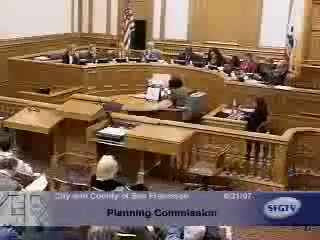
Planning Commission moves multiple calendar items, adopts minutes and hears dozens of cases
Summary
The San Francisco Planning Commission on June 21 voted to continue several matters to later dates, approved corrected minutes, and handled a broad set of land-use and permit reviews ranging from preschool expansions to medical-cannabis dispensary permits.
The San Francisco Planning Commission on Thursday moved a bundle of agenda items to later dates, approved corrected minutes for its May 17 meeting and took up a slate of land-use and licensing matters.
After chair remarks about public decorum and a roll call, the commission voted to continue a set of calendar items including cases for 1224 Ninth Avenue (2007.0428C), 842 Moultrie Street (2006.0572C), 120 Howard Street (2006.0616X), 722 Columbus Avenue (2007.0193D), and others to the dates announced on the printed calendar. A motion to continue those items carried on a roll-call vote; those matters will return on the dates staff announced.
The commission corrected a textual error in the draft minutes of May 17 — changing a reference to the Resource Preservation Fund Committee to the Historic Resource Preservation Fund Committee — and adopted the minutes as amended.
Planning Department staff summarized recent Board of Supervisors activity, including the Market-Octavia EIR certification and newly introduced board measures on green-building requirements, Hunters Point health assessments and a measure to protect properly filed medical cannabis dispensaries from enforcement. Staff also reviewed the department’s current caseload and timeline for medical-cannabis permit processing, briefing commissioners that 8 dispensaries have completed planning review, 14 applications are in process (8 scheduled and 6 awaiting scheduling) and 8 operators had not filed permits as of the department’s report.
The commission then heard and decided a number of discrete items later in the agenda (details follow in separate articles). Several development and variance items were continued for further design work, and staff was asked to return with clarified renderings and, where appropriate, revised conditions to address neighborhood concerns.
At the close of the session the commission announced further scheduling decisions for items to return on subsequent agendas; public hearings remain open for items specifically continued for redesign or added neighborhood outreach.