Get Full Government Meeting Transcripts, Videos, & Alerts Forever!
Get email alerts on the Planning Code 309 topic
No spam. Unsubscribe anytime.
Planning staff briefs Board of Appeals on Section 309 rules for downtown projects
Summary
Senior planner Craig Nikitas told the Board of Appeals that Planning Code Section 309 governs downtown (C3) projects, triggers hearings for certain height/size thresholds and lists 12 exception types—covering setbacks, sunlight, parking and bulk—which aim to tailor downtown projects while protecting streetscape and Transit First goals.
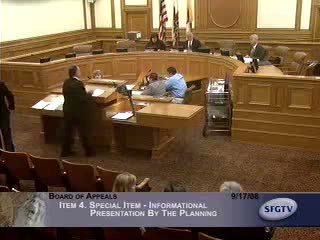
Craig Nikitas, a senior planner with the Department of Planning, gave the Board of Appeals an overview of Planning Code Section 309 and the circumstances that bring large downtown projects to public hearing. He told the board Section 309 applies to projects that construct new buildings or substantially alter existing ones in the C3 Commercial District and that hearings are required when a project exceeds 75 feet in height, 50,000 square feet in area, or seeks specified exceptions from the code.
Nikitas said the code includes 12 exceptions that cover matters such as rear-yard setbacks, sunlight and wind impacts, limits on parking downtown, curb cuts and certain height and bulk exceptions in downtown height districts. "Projects require a hearing and cannot be approved administratively if any of the following apply," he told commissioners, and he described how some exceptions are folded into the Section 309 process so the planning commission or director can impose nonstandard requirements.
Commissioners asked staff to clarify recent parking-code changes; Nikitas said there are presently no residential parking requirements downtown and that the code also places an upper limit on the amount of parking that can be provided. He and other staff also explained how Section 309 interacts with the city’s Transit First policy and the planning department’s practice of recommending streetscape or sidewalk improvements as part of larger downtown projects.
The briefing was provided to help commissioners apply the statutory criteria when appeals come before the board. Nikitas concluded by telling members he had supplied a complete text of the code and a packet summary and that staff stood ready to answer further, item-specific questions.