Get Full Government Meeting Transcripts, Videos, & Alerts Forever!
Get email alerts on the Conditional Use Extension Tang topic
No spam. Unsubscribe anytime.
Board overrules zoning administrator, allows good-cause extension for senior-housing project
Summary
The Board of Appeals overruled a zoning administrator’s denial and found a good-cause extension is implied for two conditional-use authorizations approved in 2004, allowing the developer additional time to perfect financing and permits for senior-affordable units.
The Board of Appeals voted 4–0 to overrule a zoning administrator’s determination and to treat a good-cause extension as available for two conditional-use authorizations approved in 2004 for senior-affordable housing, allowing the applicant, Eric Tang, additional time to pursue financing and building permits.
Planning staff explained the 2004 Planning Commission motion approving the two conditional-use authorizations for a total of 46 senior-affordable units did not include explicit boilerplate language authorizing the zoning administrator to grant extensions for good cause, so the administrator denied a later extension request. Planner Tina Tam said that omission constrained the zoning administrator’s authority even though staff had informally discussed the matter with the applicant.
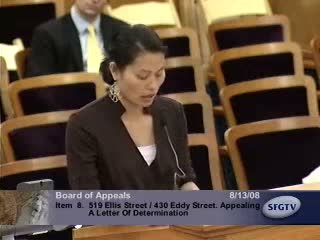
Appellant representative Steve Vettel and applicant Eric Tang told the board planners had given informal assurances that an extension would be available; they asked the board to overrule the letter of determination and give the project additional time to finalize financing. Vice President Frank Fung and other commissioners noted that motions commonly include an explicit good-cause clause, and several members argued the board can reasonably find the extension implied or authorize relief. The board overruled the zoning administrator’s determination and found a good-cause extension was available for the project; findings will be developed and filed subsequently.
The decision returns the project to the administrative path so the applicant can continue to pursue the affordable-housing development without starting over at the Planning Commission stage.