Get Full Government Meeting Transcripts, Videos, & Alerts Forever!
Get email alerts on the Billboard Permits topic
No spam. Unsubscribe anytime.
San Francisco appeals board revokes Clear Channel permit after property owners object
Summary
The Board of Appeals voted to revoke an alteration permit used by Clear Channel to remove a long‑standing billboard after property owners argued the company lacked owner authorization and the permit/agency paperwork was defective. The board said agency and notice problems justified revocation; a continuance option was rejected.
The San Francisco Board of Appeals revoked an alteration permit used by Clear Channel Outdoor to remove a billboard on Market Street, ruling that the application and supporting agency paperwork did not show adequate owner authorization.
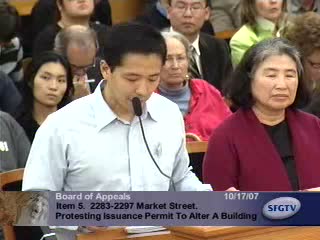
Tony Lee, whose family owns the building at the site, told the board he had been surprised to find the billboard removed and that his family’s affidavit denies giving verbal authorization to Clear Channel. "I was shocked to drive by the building and find that the billboard was down," Lee said during his testimony, urging the board to rescind the permit.
Attorney Brett Gladstone, representing the Lees, criticized how the permit forms were completed and the agency documentation that accompanied the application. Gladstone showed the board an agency form without the required owner or lessee box checked and argued that omission deprived DBI of the evidence it would normally require to confirm an applicant’s authority. "The failure to fill these out renders these permits defective," Gladstone said.
Clear Channel counsel said the company relied on a long‑standing lease that transferred sign rights and that the permit followed the procedures then in effect. "The form was filled out completely. It was reviewed, and it was approved," counsel said, adding that the company had legal rights under its contracts.
Planning and building staff had submitted competing legal analyses about how the planning code (including section 604(h) and related provisions) treats removal and relocation of nonconforming signs after Proposition G. The board focused its decision on the narrow administrative record about agency and owner authorization rather than resolving all underlying code questions.
Commissioners voted to overturn the permit on the basis that property‑owner permission was not adequately documented in the permit application or the agency form. The motion was adopted 4–0; the chair said findings would be drafted for the record. The board left open the possibility that the property owner could pursue other administrative or contractual remedies, but it concluded the permit at issue was invalid on procedural grounds.
The board’s action does not itself prohibit future lawful applications by the property owner; it removes the permit that Clear Channel had obtained and which the property owners and neighbors had challenged. The case is likely to prompt further legal review given the broader statutory questions and the city attorney’s prior advice on how the code applies to long‑standing lease arrangements.
Next steps: the board will prepare formal findings explaining the basis for revocation; parties may seek judicial review or pursue corrected permits or private settlement discussions.