Get Full Government Meeting Transcripts, Videos, & Alerts Forever!
Get email alerts on the Wireless Microcells topic
No spam. Unsubscribe anytime.
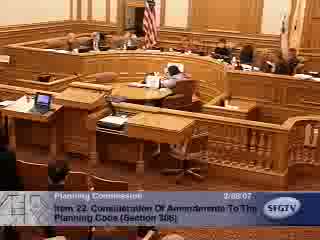
Residents press planning commission to restore neighborhood notice for small cellular 'microcells'
Summary
At a lengthy Planning Commission hearing, residents urged staff to rescind accessory‑use approvals that let wireless carriers install low‑power 'microcell' antennas without neighborhood notice or conditional‑use review; industry lawyers and the city attorney urged caution, noting federal limits and case law that constrain local review.
Dozens of residents and neighborhood groups told the Planning Commission on Feb. 1 that they want the city to undo administrative determinations that allow so‑called microcell antennas to be approved without public notice or conditional‑use hearings.
The testimony amplified complaints that small antennas have been installed on residential buildings with little or no notice to neighbors and limited opportunity to appeal. Doug Loranger of the San Francisco Neighborhood Antenna Free Union said the accessory‑use process had blocked meaningful community review and urged the commission to seek rescission: "The planning commission needs to do what it can to see that these are reversed," he said.
Why it matters: Microcells are lower‑power facilities proposed by carriers to improve local coverage and capacity. Residents say the installations can be highly visible, are placed on homes or churches without community meetings, and sometimes sit only feet from living space. Industry representatives and counsel countered that accessory determinations produce small, low‑impact facilities that are tightly conditioned and that leaving them to the full conditional‑use process would be impractical at scale.
What staff and counsel said: Planning staff explained the history: the city adopted WTS siting guidelines in 1996, but a 1997 zoning administrator determination allowed small antennas to proceed as accessory uses under section 204 of the planning code. Deputy City Attorney Bill Sanders told commissioners that federal law imposes limits on what local bodies can do with respect to radio‑frequency health claims and discrimination between carriers, and he summarized MetroPCS v. City and County of San Francisco (9th Cir.) as establishing the standards local bodies must apply when weighing necessity, compatibility and substantial evidence. Sanders said the planning code and the courts set a narrow framework for denials but warned commissioners they still retain zoning‑based discretion when the record supports it.
Industry and neighborhood exchange: Paul Albrighton, attorney for wireless providers, defended the accessory‑use process as the faster route to deploy many low‑power sites while meeting design and RF conditions. Residents such as Erica Zweig and Robert Hinnish described installations that they said had caused interference, signage warning of emissions on roofs, and a lack of timely notice.
What's next: Staff told the commission it would study options including limiting accessory determinations on the city’s most sensitive preference sites, requiring broader notice, or rescinding past interpretations. Commissioners signaled they want further briefing from the city attorney and staff and more public outreach before any formal code change.