Get Full Government Meeting Transcripts, Videos, & Alerts Forever!
Get email alerts on the Infrastructure Broadcast topic
No spam. Unsubscribe anytime.
Planning Commission approves Sutro Tower antenna replacements after neighbors raise interference concerns
Summary
The commission approved discretionary review and permits to replace four broadcast auxiliary antennas and add receive‑only antennas at Sutro Tower; neighbors testified about long‑standing interference and neighborhood impacts while sponsors and technical experts said the changes are FCC‑driven and receive‑only.
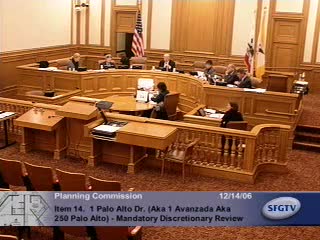
The Planning Commission approved a discretionary review and permit for antenna replacements at Sutro Tower after a lengthy hearing that included technical testimony and neighborhood complaints.
Robert McCarthy, counsel for Sutro Tower Inc., and Gene Zastrow, the tower's general manager, said the changes are part of a nationwide, Federal Communications Commission‑driven retrofit required to reduce harmful interference with public‑safety radio systems. "The replacement antennas... operate in the same spectrum as the old antennas, but a smaller portion of that spectrum, so it conserves spectrum and therefore lets the emergency services have more room for their equipment," Zastrow said. Kristen Jacobson, representing Sprint Nextel, testified that the company's part of the project is necessary to comply with the FCC order that paired Sprint/Nextel spectrum transfers with retrofit funding.
Neighbors and neighborhood groups—including Forest Knolls and the Twin Peaks Improvement Association—testified about persistent interference and quality‑of‑life effects, with liaison Walter Kaplan asking whether the application demonstrates necessity or if alternatives exist. "Is this permit application one that makes a showing of necessity? Or in the alternative, are there any alternatives to the addition of more stuff to Sutro Tower?" Kaplan asked.
Technical witnesses said the proposed broadcast auxiliary service (BAS) antennas and rooftop receive‑only dishes do not transmit and thus do not generate radio‑frequency emissions. Structural engineer Ron Hamburger said past seismic and wind upgrades had been completed and that the tower undergoes annual inspections; RF specialist Bill Hammitt was available to answer interference questions.
After discussion and a request that Sutro Tower maintain and continue neighborhood liaison channels, the commission voted to take discretionary review and approve the project with standard conditions. Commissioners recorded unanimous "Aye" votes on the approval motion.