Get Full Government Meeting Transcripts, Videos, & Alerts Forever!
Get email alerts on the Garage Policy topic
No spam. Unsubscribe anytime.
Planning Department previews new garage review policy, adds safeguards for historic buildings
Summary
Planning staff proposed a bulletin to guide when garage permits can be approved over the counter, include special treatment for buildings 50 years or older, and require coordination with DPW on minor encroachment permits. Commissioners and public pressed for clearer language on bay windows, interior impacts and transit-street definitions.
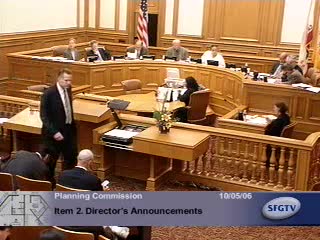
Planning Department staff outlined a new policy on Oct. 5 to clarify how garage permits will be reviewed, when minor applications will be signed off over the counter and when projects should be routed for formal discretionary review.
The proposal would (1) treat garages for historic resources as discretionary, (2) identify historic resources as buildings built in or before 1920 or 50 years or older, (3) discourage raising historic resources when that would jeopardize eligibility for the California or National Register of Historic Places, and (4) ask applicants to coordinate with the Department of Public Works for minor encroachment permits that can affect driveway slope and curb transitions.
Staff said the Landmarks Board submitted detailed suggestions, including examples and illustrations, and the bulletin was revised to reflect several of its points. The draft also calls for clear guidance on when garages may be inappropriate because they would harm transit, bicycle or pedestrian corridors.
"There should be language that mentions that in some instances, the insertion of a garage opening will not be approved in historic resources," a staff summary said, citing the Landmarks Board's suggested language for clarity.
Public commenters urged crisper definitions. "What gives a building architectural merit?" asked Jean Pierre Guittard during public comment, recommending that language be clarified so potential applicants understand how to approach the rule. Others asked why the interior of a space matters if the commission's focus is exterior appearance; staff replied that interior changes are relevant when they are visible from the exterior and can produce awkward-looking alterations.
Commissioners pressed staff to define which streets would trigger escalated review when a property sits on an "identified transit, bicycle or primary pedestrian street" and to ensure applicants have a timely process rather than an open-ended delay. Staff said the designation would be limited to streets listed in the General Plan/Transportation Element or a formally adopted bicycle plan, not merely any street that happens to have bicycle traffic.
The commission did not take a formal vote on the bulletin at the meeting. Staff said they will revise the draft to reflect Landmarks Board comments and the clarifications requested by commissioners, and return with a revised text for adoption or final administrative action.