Get Full Government Meeting Transcripts, Videos, & Alerts Forever!
Get email alerts on the Wireless Telecom topic
No spam. Unsubscribe anytime.
Board upholds DBI permit for T‑Mobile microcell despite neighborhood notice complaints
Summary
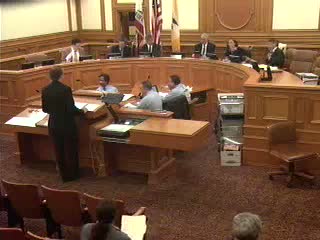
After testimony from residents and experts, the Board of Appeals voted 4–1 to uphold DBI's building permit for a T‑Mobile microcell at 1801–1813 Fulton St, finding legal constraints on denying permits for RF emissions and reliance on DPH and accessory‑use determinations.
The Board of Appeals considered an appeal by Vladimir Gammer (represented by Doug Loringer) of a Department of Building Inspection permit for a T‑Mobile microcell facility at 1801–1813 Fulton Street. Appellants argued the zoning administrator's May 15, 2006 letter classifying certain low‑power wireless installations as accessory uses was not adequately noticed to residents and had the practical effect of preventing timely appeals. They also argued the Fulton Street site is in a mixed‑use/residential area where the city's WTS (wireless telecommunications) guidelines call for conditional‑use review and 500‑foot notice, and they cited prior compliance concerns at a Haight Street site.
T‑Mobile attorney Paul Albritton and technical witnesses said the proposal is a small, low‑wattage microcell (2W radios) that was reviewed by Department of Public Health and other city agencies; Albritton cited RF exposure calculations (cited in the record as 0.0052% of the federal public exposure limit in one exhibit) and emphasized that federal law forbids denying siting on the basis of RF emissions when the project meets FCC standards. Planning staff (Tina Tam) explained that the accessory‑use determination dates to the late 1990s and that the May 2006 letter was a site‑type clarification for T‑Mobile microcell deployments; she said block‑book notation is the practical avenue for residents to receive early notice of such determinations.
Several neighbors (including representatives of advocacy groups and co‑appellants from previous appeals) testified that they received no notice of the May 15 letter and that the accessory‑use process undermines neighborhood notification and review. They asked the board to overturn the letter of determination or to excuse the appeal deadline. The Board debated legal limits (federal preemption on RF health findings, the limited scope of what appeals may address), the adequacy of notice, and the Planning Department’s upcoming review of WTS guidelines.
On procedural motions the board declined to continue the hearing pending the Planning Commission review. The board then voted 4–1 to uphold the DBI permit as issued (Commissioner Holland dissenting). The permit remains in place with no new conditions; Planning staff said the broader accessory‑use process will be reviewed by the Planning Commission on February 8 (informational hearing), where notice and guideline changes can be considered.