Get Full Government Meeting Transcripts, Videos, & Alerts Forever!
Get email alerts on the Baby Prop C topic
No spam. Unsubscribe anytime.
Supervisors pause plan to use Baby Prop C interest after large public outcry
Summary
After hours of public testimony from parents, educators and childcare providers, supervisors voted to continue an ordinance that would have used interest from the Babies & Families First (Baby Prop C) fund to cover baseline city spending, citing concerns about voter intent and requests for more community consultation.
The Budget & Appropriations Committee on June 13 paused consideration of an ordinance that would allow the city to use interest earned in the Babies & Families First Fund to reduce the early‑care baseline spending requirement for multiple fiscal years, after intense public comment and objections from childcare providers and advocates.
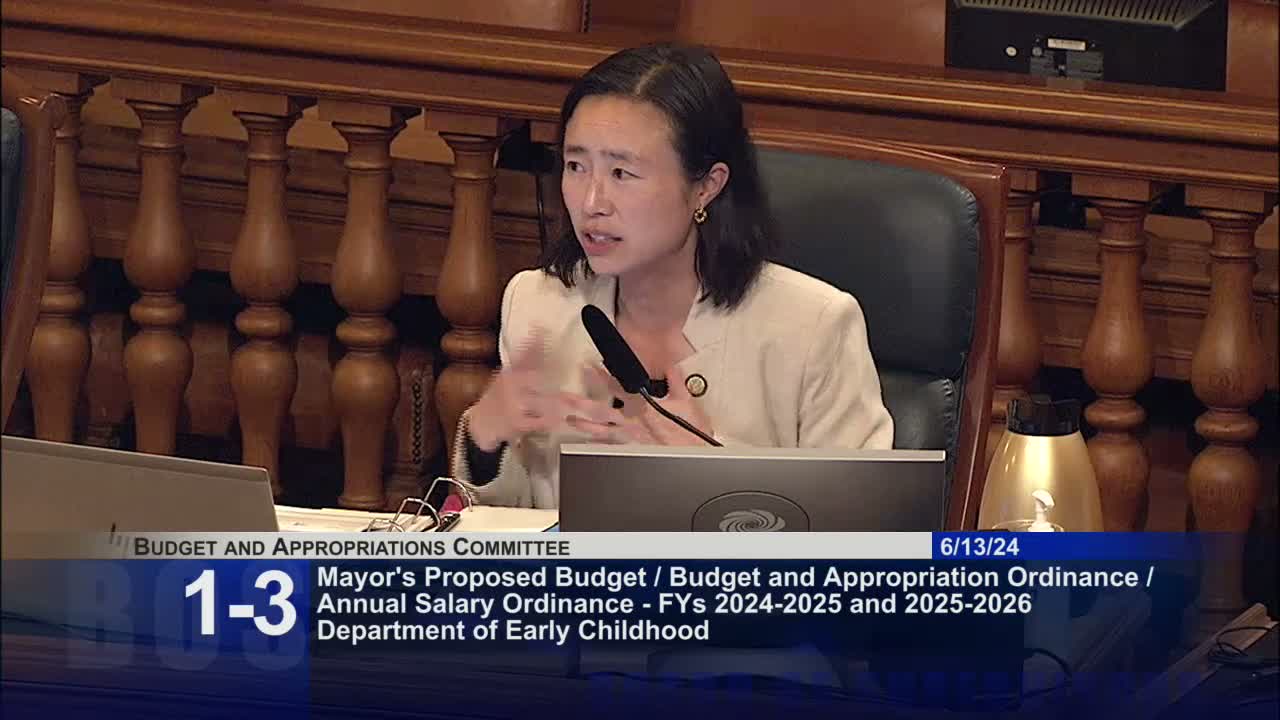
Chair Connie Chan said the committee heard “a lot of passion and public testimony” and accepted a motion from Supervisor Marjan Melgar to continue the measure to the call of the chair so the mayor’s office and community groups can discuss revisions. The motion passed. The continuance stops immediate adoption and gives staff and advocates more time to negotiate terms and safeguards.
Supporters of the ordinance — including city staff who framed the change as a temporary way to credit interest against required baseline obligations — said the step was intended to free limited general‑fund dollars to address urgent needs elsewhere in the budget. HSH and the administration had proposed some uses of interest in other contexts during the hearing.
But dozens of childcare providers, family‑resource centers and parent‑advocacy groups testified that Baby Prop C revenue was intended by voters to expand and stabilize early‑care services and the workforce. “Do not balance the budget on the backs of babies,” said Rachel Church, a parent leader with Parent Voices of San Francisco, during public comment. Multiple speakers said the program is just beginning to show results and warned that diverting interest would undercut long‑term plans to expand access and raise educator pay.
Representatives of the Department of Early Childhood and the Budget Analyst’s Office briefed supervisors on the mechanics: the ordinance would use interest earnings as a credit against baseline spending in the short term and suspend baseline growth for a limited period. The Budget Analyst noted the change is a policy decision for the board.
Supervisor Marjan Melgar said she sought a continuance to allow negotiation with community stakeholders and the mayor’s office before any final vote. “This work is vital to families and the economy,” Melgar said, asking for additional time to refine safeguards and reserve thresholds.
The committee did not adopt the ordinance; the item will return after further discussion between city staff and community representatives. The debate leaves the city’s fiscal planners with competing short‑term choices: shore up immediate budget gaps, or preserve a locally dedicated revenue stream created to expand childcare and early education.