Get Full Government Meeting Transcripts, Videos, & Alerts Forever!
911 and ambulance metrics slip as dispatch and hospital offload delays strain response system
Summary
The controller's performance report and department presentations showed declines in 911/ambulance response: dispatcher staffing dropped sharply since the pandemic, ambulance response fell short of targets at times, and ambulance patient offload times (APOD) spiked (90th percentile recently near 51 minutes), contributing to slower EMS response.
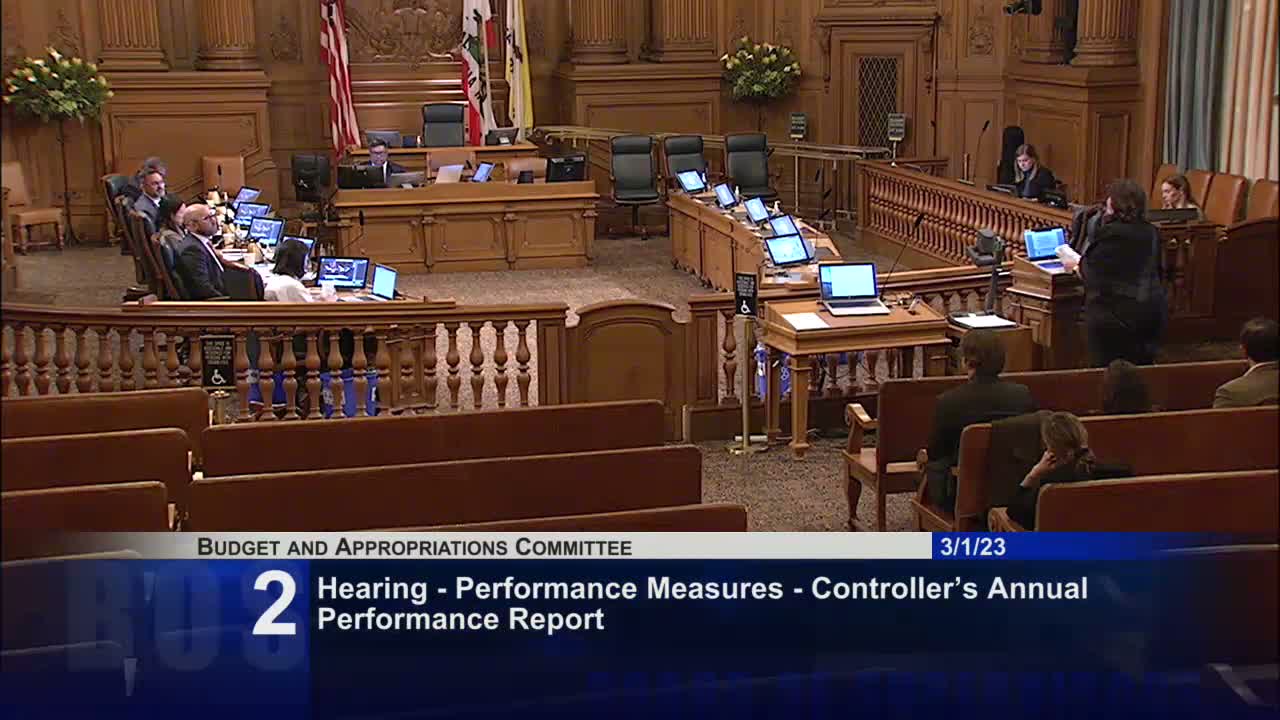
City performance data presented to the Budget & Appropriations Committee showed declines in emergency response metrics that supervisors described as alarming and that department leaders linked to multi‑year staffing shortfalls across dispatch, ambulance providers and hospitals.
The city performance director highlighted a range of measures in the annual report and told the committee that "the final number for 2022 is 37 fatalities, which is the highest since this policy was enacted by the city," calling attention to Vision Zero metrics and the broader role of performance monitoring.
On 911 dispatching, Robert Smuts of the Department of Emergency Management said effective dispatcher staffing fell from pre‑pandemic levels in the mid‑150s to roughly 100, driven by a hiring freeze early in the pandemic, vaccine‑related separations and difficulty…
Already have an account? Log in
Subscribe to keep reading
Unlock the rest of this article — and every article on Citizen Portal.
- Unlimited articles
- AI-powered breakdowns of topics, speakers, decisions, and budgets
- Instant alerts when your location has a new meeting
- Follow topics and more locations
- 1,000 AI Insights / month, plus AI Chat