Get Full Government Meeting Transcripts, Videos, & Alerts Forever!
Get email alerts on the Food Security topic
No spam. Unsubscribe anytime.
Supervisors, city agencies and community groups outline long-term food sovereignty goals and urge sustained funding after COVID-era emergency response
Summary
A multi-agency hearing on food insecurity highlighted large pandemic-era increases in need, community-led responses, and recommendations to reauthorize and resource the Food Security Task Force, expand centralized information/referral, sustain community hubs, and pursue food sovereignty with racial-equity focus.
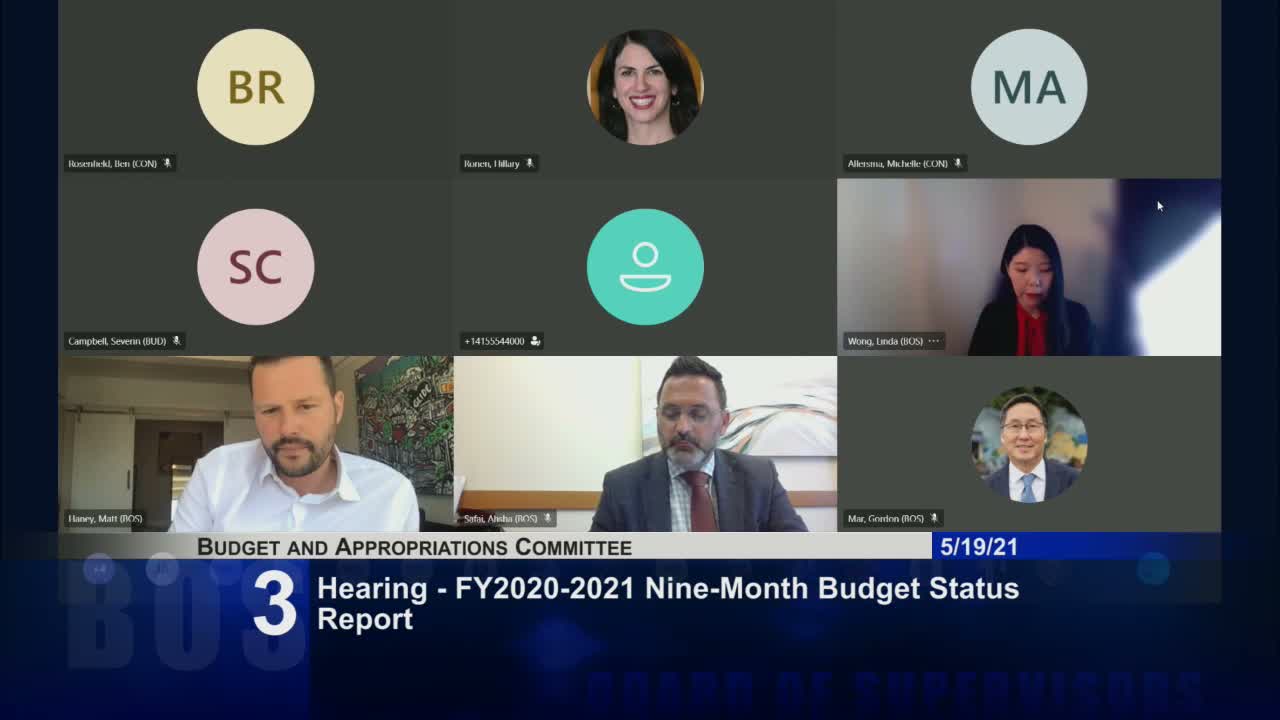
The Budget & Appropriations Committee held an extended May 19 hearing on food insecurity and food sovereignty that brought testimony from the Food Security Task Force, the Office of Racial Equity, the Human Services Agency, San Francisco Unified School District and dozens of community groups.
Supervisor Matt Haney and Supervisor Ronan framed the hearing by noting dramatic pandemic-era increases in need. "One in four San Franciscans are at risk of hunger," Ronan said, summarizing Task Force findings and saying the board must reauthorize and resource the Task Force to pursue coordinated, equity-centered solutions.
Paula Jones of the Department of Public Health, vice chair and staff to the Food Security Task Force, recommended sustaining community-led innovations developed during COVID, continuing central coordination and information referral (3-1-1 and a city resources website), reauthorizing the Task Force with expanded community membership and staff resources, and tracking food-security data. "Interventions that provided cash assistance, like gift cards, also provided incredible choice for households," she said.
Shakira Simley from the Office of Racial Equity urged a shift from short-term food security to food sovereignty'structural changes that increase community control over production, distribution and procurement. Susie Smith of the Human Services Agency reported operational responses during the pandemic: CalFresh caseloads doubled (about 32,000 to 62,000), home-delivered meals and grocery distributions surged and an estimated 947,000 people will be served by mass food support this fiscal year. Jennifer LaBarre from SFUSD said the district provided nearly 7,000,000 meals during the pandemic and will continue universal free school meals under USDA waivers through June 30, 2022.
Public commenters, including representatives from the San Francisco Marin Food Bank, La Cocina, mutual-aid groups and community food hubs, urged sustained funding for culturally appropriate and dignified distribution models, more support for small BIPOC-owned food businesses, expanded voucher programs and funding for community-run markets. Marshawn Tabin of the San Francisco Marin Food Bank asked the board to support community partners and food hubs and to sustain current service levels.
Supervisors discussed creating a citywide coordination role (a "food czar" or similar office), rethinking procurement to favor community-led organizations, and investing in urban agriculture and food infrastructure. The committee filed the hearing after public comment.