Get Full Government Meeting Transcripts, Videos, & Alerts Forever!
Get email alerts on the Housing Budget topic
No spam. Unsubscribe anytime.
Supervisors press MOHCD on racial equity, transparency after BLA budget review; committee files item
Summary
The Budget & Appropriations Committee heard a BLA review and MOHCD director briefing that documented large budget growth and diverse funding sources, prompting supervisors and public commenters to press MOHCD for clearer reporting, racial-equity outcomes, and more support for Black-led and small community-based organizations. The committee filed the item for follow-up during the full budget process.
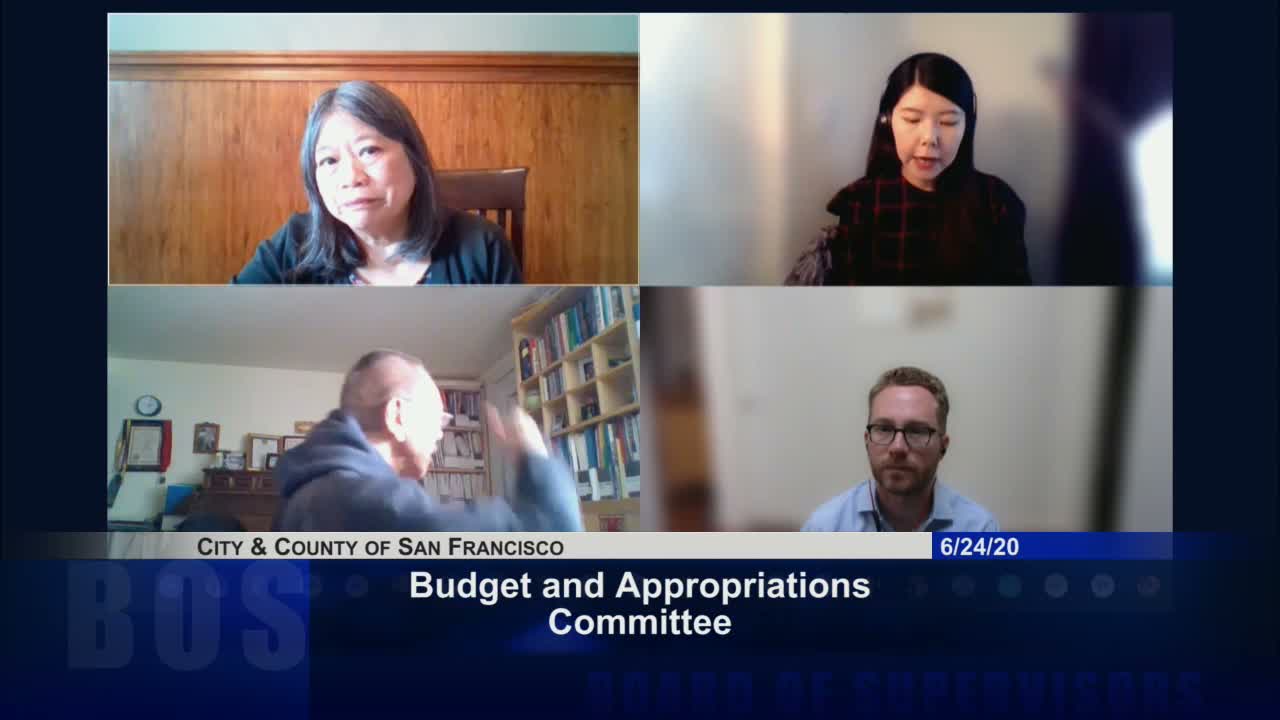
The Board of Supervisors’ Budget and Appropriations Committee on June 24 heard a detailed Budget Legislative Analyst (BLA) report and a presentation from Mayor’s Office of Housing and Community Development (MOHCD) Director Eric Shaw on the office’s budget, staffing and program pipeline, then filed the item for further review during the full budget cycle.
The BLA told the committee that MOHCD’s adopted fiscal-year budget was about $317.2 million, and that supplemental appropriations and additional expenditure authority since June 30 had raised the office’s available expenditure authority to roughly $1.3 billion for FY19–20. The BLA’s ten‑year review documented growth in affordable units, rising community‑based organization (CBO) grant funding, and at least seven significant new funding sources created in the last decade. The analyst recommended clarifying how development projects reach MOHCD for approval and suggested amending the administrative code so quarterly MOHCD reports include that decision history.
MOHCD Director Eric Shaw highlighted accomplishments and the development pipeline, including HOPE SF work and the DAHLIA housing portal. Shaw said MOHCD manages four divisions — housing, community development, homeownership/below‑market programs, and fiscal administration — and emphasized the office’s racial equity objectives and work to preserve and expand affordable housing. He identified the $600 million affordable housing bond passed by voters as a major funding source and acknowledged COVID‑19 uncertainties for future revenue and developer timelines.
The committee and public comment focused heavily on racial equity in grantmaking and program outcomes. Dozens of callers — including representatives of Filipino, Black‑led and neighborhood organizations — urged the city not to cut outreach and tenant‑counseling programs, asked for clearer funding breakdowns, and pressed MOHCD to increase support for Black‑led organizations and small community developers. Several speakers cited examples where recommended grants were reduced or delayed and asked for data on how much funding has gone to Black‑led groups over the past decade.
Supervisors pressed MOHCD on specific questions the BLA raised: a disaggregated staff breakdown by race and ethnicity; how community development RFPs and add‑backs are managed; why award notifications were delayed; the extent of one‑time ERAF/ERAP dollars in the current budget; and how carryover balances are encumbered. MOHCD officials (including deputy director Benjamin McCloskey and acting housing deputy Lydia Ealy) said some funds are restricted by bond or federal rules, explained that carryover balances are often encumbered by multiyear development timelines, and described efforts — such as capacity‑building grants and community partnerships — intended to help smaller providers compete for funding.
The BLA and MOHCD acknowledged gaps in public reporting. The BLA recommended reinstating and codifying the workforce alignment committee’s successor (the committee referenced OEWD’s inventory under Administrative Code Chapter 30) and standardizing participant and expenditure reporting so the city can answer how many unique homeless individuals participate in workforce services and how dollars are allocated by program and population.
After questions and extended public comment, Chair Sandra Lee Feuer moved to file item number 1 so MOHCD could return during the full budget process with requested clarifications. The committee approved the motion by roll call vote and will expect MOHCD to provide more detailed pipeline and equity reporting as the budget review continues.
What happens next: MOHCD agreed to provide the requested breakdowns — including pipeline detail, how add‑backs are administered, and data on outcomes by race — and the committee will revisit the office’s budget and the BLA recommendations during the full budget hearings.
Sources: BLA presentation and MOHCD briefing to the Budget and Appropriations Committee on June 24, 2020; public comment and supervisor questioning during the committee meeting.