Get Full Government Meeting Transcripts, Videos, & Alerts Forever!
Get email alerts on the Nonprofit Sustainability topic
No spam. Unsubscribe anytime.
Supervisors hear urgent appeals to shore up nonprofit funding as COVID-19 strains services
Summary
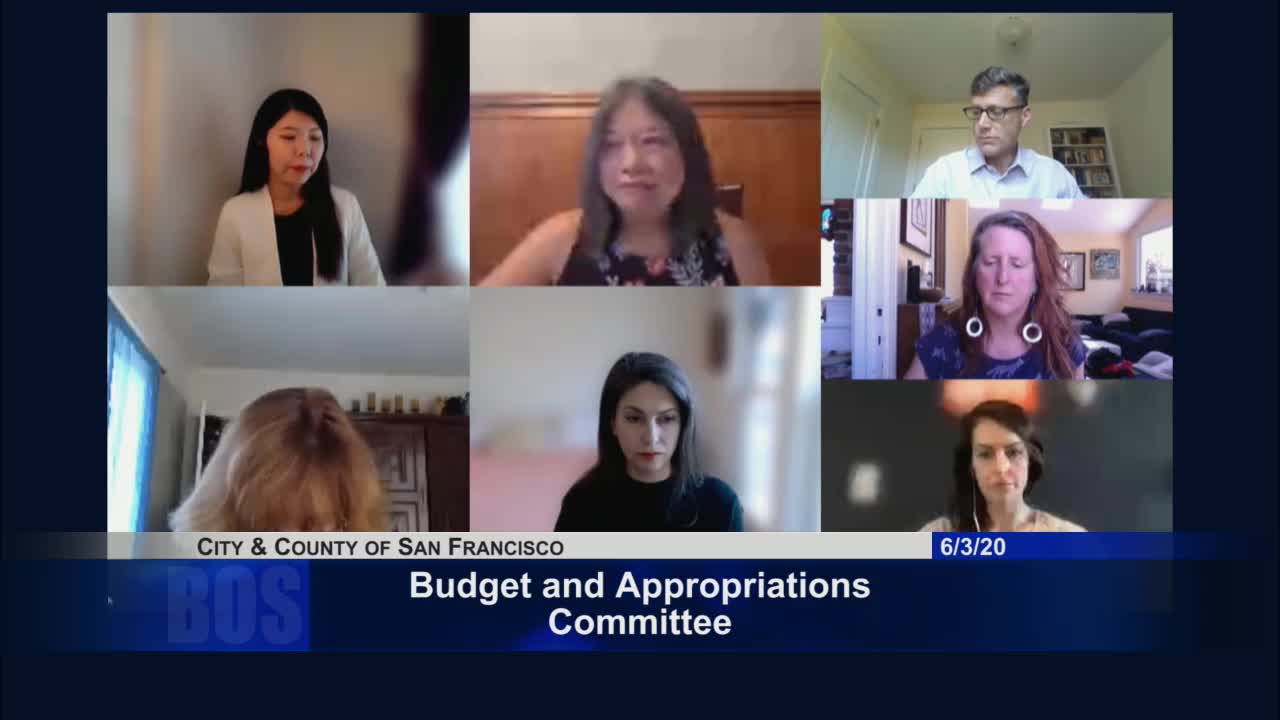
At a June 3 Budget & Appropriations Committee hearing, city officials and nonprofit leaders warned that COVID-19 has accelerated long-standing funding and workforce problems; speakers urged preserving contract payments, childcare funding and a racial-equity approach to the budget. The committee continued the item for further work.
San Francisco supervisors and city budget officials heard urgent warnings on June 3 that nonprofit providers face an immediate cash-flow and workforce crisis and urged choices in the coming budget not to undercut essential services.
City Controller Ben Rosenfield told the committee that nonprofit contractors deliver "over a billion dollars of critical service" for the city and described emergency directives his office issued to keep payments flowing when services were interrupted by COVID-19. "Our hope here was to support the sustainability of nonprofits during this highly unusual circumstance," Rosenfield said.
Nonprofit leaders said the pandemic has amplified long-standing problems: low pay, high turnover, and underfunded contracts that do not cover full costs. "The nonprofit sector ... is the frontline response system in this city and county," said Steve Fields of the Human Services Network, arguing nonprofits should be treated as part of the city's workforce. Sherilyn Adams added that recovery planning must center racial and economic justice and the additional COVID-related costs such as PPE and janitorial services.
Speakers from the Budget Justice Coalition and dozens of public callers urged the board to avoid broad austerity, use reserves and new revenue, and prioritize community-based responses over punitive, high-cost criminal-justice spending. Jenny Friedenbach of the Budget Justice Coalition warned against replaying 2009-style austerity, saying it lengthened that recovery and urging the city to "use reserves and new revenue" rather than automatic cuts.
Nonprofit providers gave concrete examples of strain. Laina Shaff of the Felton Institute described contract-transfer delays and said the agency was "carrying $1,200,000 in cash burden." Several child-care and family-service providers warned that social-distancing requirements will reduce capacity and urged preservation of childcare capital and teacher stipend funds.
Across public comment, advocates repeatedly framed the issue as one of racial equity, urging the Board to prioritize organizations serving communities of color and to maintain language-access and culturally specific services.
The hearing did not resolve the contested budget trade-offs. After public testimony the committee unanimously voted to continue Item 1 to the call of the chair for further deliberation and follow-up with departments and presenters.
What happens next: the controller's office, the Mayor's Budget Office and departmental staff said they will continue consultations with nonprofit providers, and the committee left the hearing open for more detailed budget and implementation guidance.