Get Full Government Meeting Transcripts, Videos, & Alerts Forever!
Get email alerts on the Transit Infrastructure topic
No spam. Unsubscribe anytime.
Supervisors press MTA on long-term train-control plan; committee continues ordinance to Nov. 16
Summary
After a detailed presentation on the communications-based train-control project, supervisors raised concerns about vendor lock‑in and a proposed multi‑decade contracting structure and voted to continue the MTA item to Nov. 16 for additional briefings and comparative examples.
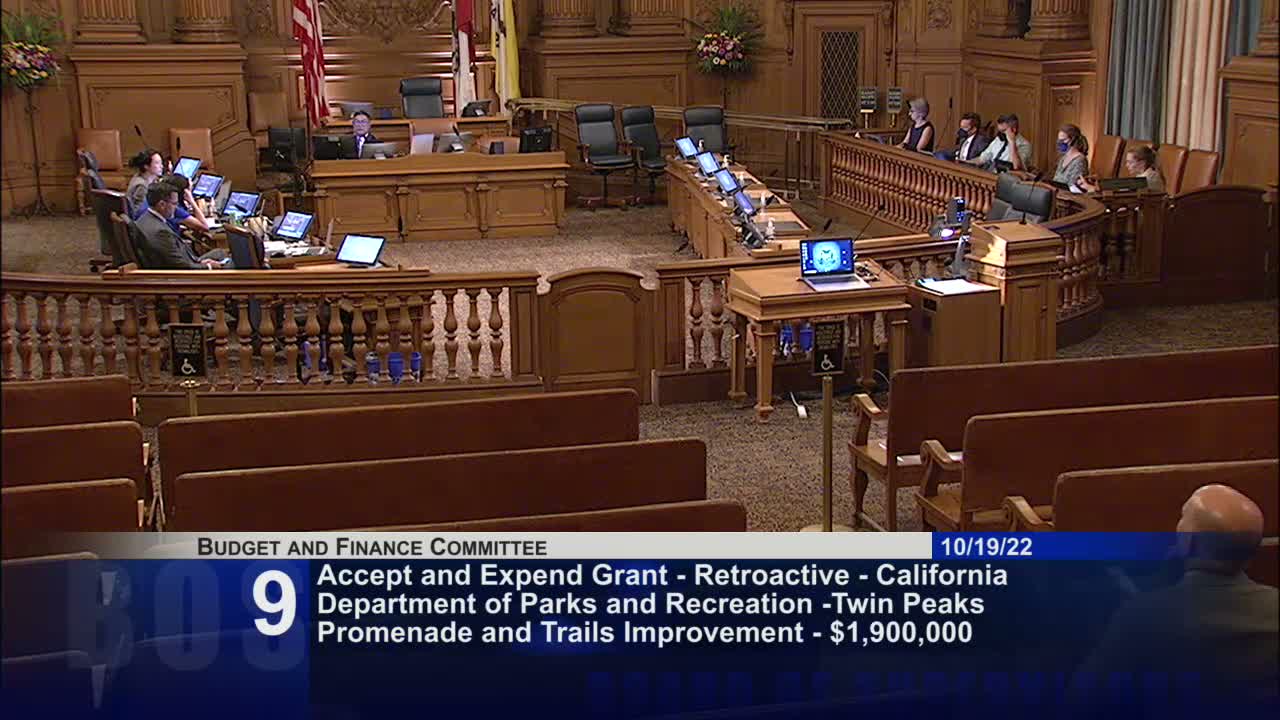
San Francisco Municipal Transportation Agency staff briefed the Budget & Finance Committee on Oct. 19 about a proposed replacement of the city’s subway and light‑rail train‑control system and sought authority to issue an RFP, waive a 10‑year contract limit and use negotiated procurement. The committee unanimously voted to continue the matter to Nov. 16 to allow staff to provide additional briefings on procurement choices, contract length, comparative practice and risks.
Project manager Dan Howard and transit program staff described the system’s functions—to track vehicle location, supervise braking and routing, reduce delays and enable higher frequency—and the proposed contracting structure: a single RFP that would cover an eight‑year design and procurement period, an initial 10‑year support term, and two five‑year optional extensions (together creating a potential multi‑decade supplier commitment). Staff said the procurement separates the supplier (proprietary technology provider) from local installers and seeks to negotiate performance‑based support terms and vendor‑supplied parts agreements that align supplier incentives with system reliability.
Supervisors Ashish Safaei and Chan questioned the proposal’s risk of lock‑in to a proprietary vendor, the implications of retrofitting 219 light‑rail vehicles, and a long (effectively 30‑year) overall term; Safaei called the request "significant" and asked for examples of other agencies that packaged procurement and long‑term support successfully. Staff said an RFP would likely be issued in January 2024 to meet the project schedule and that the pilot phase is expected to start delivering benefits in 2027 with subway replacement around 2028. The committee agreed to continue the ordinance to Nov.16 to permit more detailed briefings and to allow supervisors to review comparative examples and contract safeguards before authorizing the procurement path.