Get Full Government Meeting Transcripts, Videos, & Alerts Forever!
Get email alerts on the Housing Finance topic
No spam. Unsubscribe anytime.
Committee advances ordinance to let city issue tax‑exempt revenue bonds for workforce and middle‑income housing
Summary
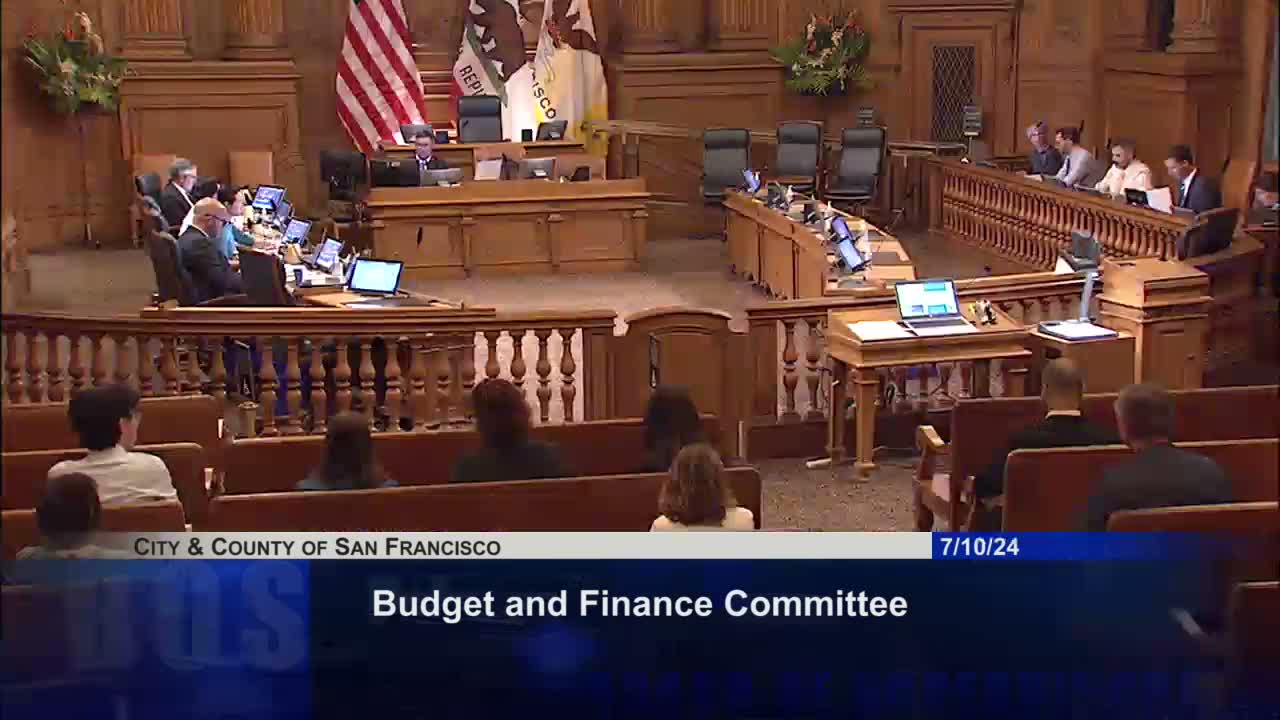
The Budget & Finance Committee on July 10 advanced an ordinance to enable the City to issue tax‑exempt revenue bonds to finance workforce and middle‑income housing projects, adopting three technical amendments and forwarding the measure to the full Board with a positive recommendation.
The Budget & Finance Committee on Wednesday voted to advance an ordinance that would let the city issue tax‑exempt revenue bonds to support acquisition, rehabilitation and construction of workforce and middle‑income housing.
Supervisor Aaron Paskin, who introduced the legislation, said the tool treats housing “like infrastructure” and could unlock financing that moves projects forward without direct taxpayer repayment. “Financing is the key to affordable housing,” Paskin said, arguing tax‑exempt revenue bonds can reduce borrowing costs and, at lower interest rates, eliminate the need for subsidies on some projects.
The ordinance would authorize two bond types: governmental purpose bonds requiring government ownership, and 501(c)(3) conduit bonds where a nonprofit owns property and borrows under tax‑exempt terms. The proposal sets affordability parameters that allow project rents at up to 120% of area median income (with an average target of about 100% AMI for workforce housing), and includes provisions to limit income recertification to every five years and to cap rent increases to the lesser of AMI growth or 4% annually after initial certification.
Committee members and city staff emphasized the tool is primarily a financing mechanism, not a subsidy. Dan Adams of the Mayor’s Office of Housing said the bonds are most likely to serve larger projects and publicly owned or nonprofit‑owned assets rather than small‑sites acquisitions. “This tool kind of a bond financing structure is likely not the right financing mechanism for smaller projects,” Adams said.
Speakers during public comment — including housing advocates and developers — urged approval. Fernando Marti and Eric Tao said tax‑exempt bonds can bridge a financing gap for middle‑income housing that market investors currently avoid. The Housing Action Coalition and other nonprofits also voiced support.
The committee adopted three amendments read into the record that add workforce preferences, clarify the Public Utilities Commission’s continuing jurisdiction over public‑power feasibility, and confirm the measure would not affect the mayor’s office of housing’s existing 501(c)(3) bond program. The committee approved the amendments and then voted to forward the amended ordinance to the full Board with a positive recommendation.
Next steps: The ordinance will appear on the Board of Supervisors agenda for further consideration. Any formal implementation — bond issuance, property selection, or pairing with subsidies — will come later on a project‑by‑project basis and will require additional approvals and financing decisions.