Get Full Government Meeting Transcripts, Videos, & Alerts Forever!
Get email alerts on the Early Care Funding topic
No spam. Unsubscribe anytime.
Supervisors hear plea to release $42M for early care; debate grants versus loans
Summary
The Budget & Finance Committee reviewed a $42 million Prop C release to the Office of Early Care and Education (OECE) to fund a $25M economic recovery grant/loan program, $10M in childcare subsidies and teacher stipends; providers urged grants and broader eligibility while supervisors pressed OECE on loan criteria and accountability.
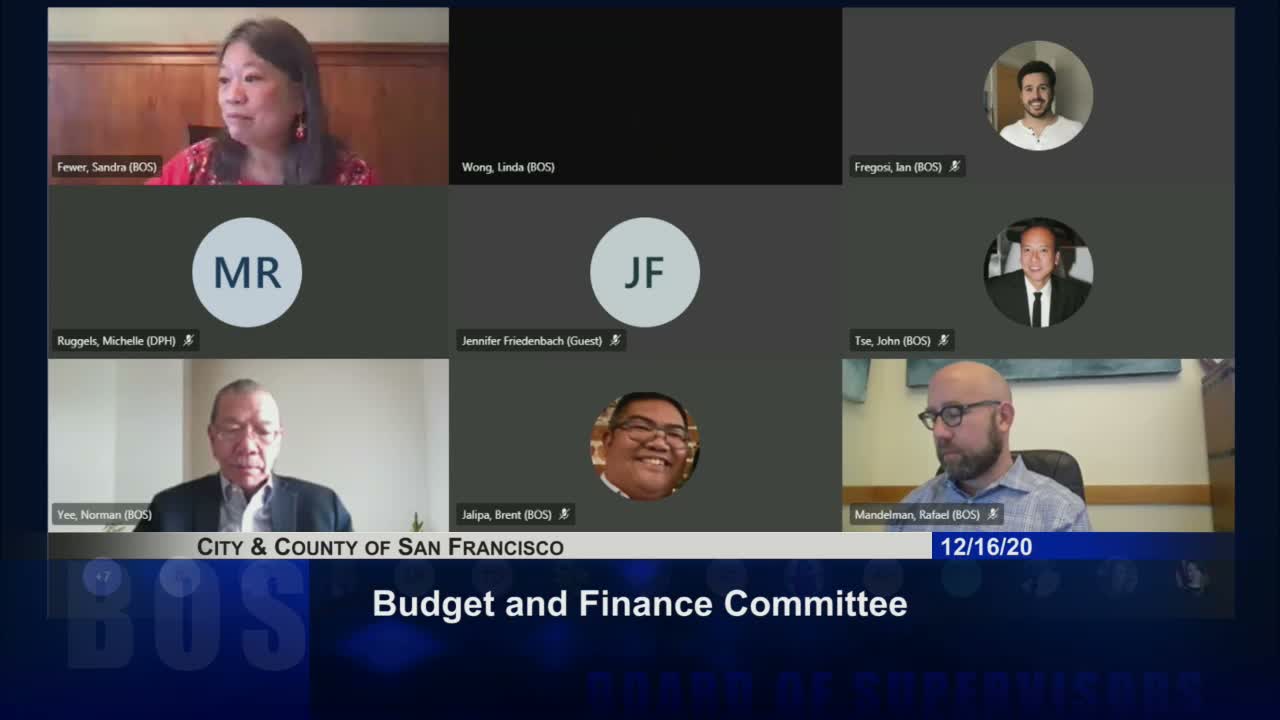
Chair Sandra Lee Feuer opened the special meeting to consider releasing $42 million in Prop C reserve funds for early care and education, saying the year had been ‘‘the most challenging budget year in San Francisco’s recent history.’”
OECE Director Ingrid Mesquita told supervisors the request would fund an economic recovery grant and loan program ($25,000,000), $10,000,000 in subsidies to reduce the childcare wait list and expand classroom capacity, and additional money for teacher stipends and OECE staffing to administer the plan. Mesquita said roughly 500 sites across the city — family childcare homes, center‑based nonprofits and for‑profits — would be eligible for supports and that the program aims to preserve the early care infrastructure so parents can return to work.
The Budget and Legislative Analyst noted the release would draw $42,000,000 from Prop C reserves (revenues from the commercial rent tax) and leave roughly $241,000,000 on reserve. President Yee and several supervisors emphasized the funding was voter‑restricted Prop C money, not general fund, and urged careful stewardship to avoid supplanting baseline programs.
Public commenters — parents, teacher leaders and childcare providers — urged the board to approve the release quickly and to prioritize outright grants and expanded subsidies rather than loans. Speakers representing Parent Voices and family childcare coalitions said about 3,000 children remain on wait lists and that many small providers are on the brink of permanent closure. ‘‘We need this funding. Our livelihood depends on it,’’ one caller said.
Supervisors asked OECE staff to clarify the split between grants and loans. Director Mesquita said the implementing legislation allowed for both and that the department had set aside up to $8,000,000 for loans with the majority intended as grants; loans could be structured as forgivable depending on applicants’ relationships with the city and performance. Several supervisors, including President Yee, urged maximizing grants for struggling providers and asked staff to return quickly with tightened criteria and accountability measures.
Because of unresolved questions about the loans-versus‑grants mix and the urgency to get funds out, Chair Feuer offered to continue the item to a special meeting so OECE could refine its criteria and distribute a revised plan for committee review. OECE committed to reexamining the grant/loan criteria and reporting back within days.
The committee did not finalize a release at this hearing; members agreed to reconvene to resolve outstanding design questions before the funds are formally released to OECE.