Get Full Government Meeting Transcripts, Videos, & Alerts Forever!
Get email alerts on the Budget Shortfall And Timeline topic
No spam. Unsubscribe anytime.
Comptroller warns of $1.1B–$1.7B multi‑year shortfall; mayor's office delays budget timeline and orders spending pauses
Summary
Comptroller Ben Rosenfield and the mayor's budget office told supervisors the city faces a steep revenue decline from COVID‑19 and will update projections in April; departments were instructed to pause nonessential hiring and spending while staff develop a rebalancing plan and an interim status‑quo budget.
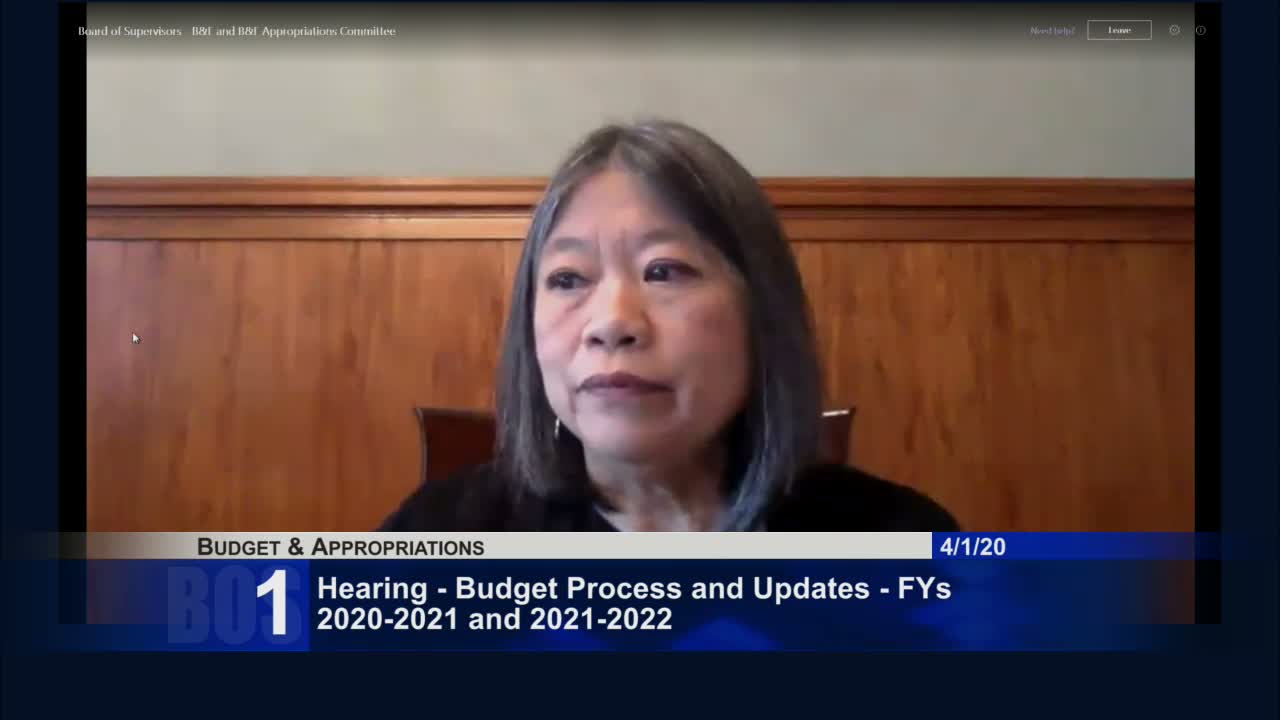
Comptroller Ben Rosenfield told the Budget & Appropriations Committee on April 1 that the city's finances will be "significantly" affected by COVID‑19, with two modeled scenarios producing a cumulative two‑year shortfall between about $1.1 billion (optimistic) and $1.7 billion (pessimistic). Rosenfield said immediate losses in the current fiscal year are driven by hotel, transfer and sales taxes and that next fiscal year the general fund could see tax revenue declines in a range of roughly $330 million to $580 million depending on the scenario.
Rosenfield noted the city has reserves that can blunt the shock: roughly $590 million in rainy‑day and stabilization reserves and a $150 million general reserve. "They are built for this sort of a moment," he said, but he cautioned that reserves would "soften but not eliminate the multi‑year revenue losses we face ahead." The controller's office said it will update the joint report in April to incorporate COVID‑related expenses and any federal or state stimulus receipts.
The mayor's budget office (identified in the transcript as Kelly Kapatrick) reviewed federal relief timelines, including CARES Act provisions for direct aid, loans for small employers, transit and hospital funding, and a state allocation that could provide flexible funding for homelessness and hotels. Given the uncertain flow of state and federal dollars, the mayor has instructed departments to pause nonessential hiring and spending, prioritize essential capital projects and develop a rebalancing plan for the current year. Staff said an interim, status‑quo budget would be introduced to carry city operations through the first quarter of the next fiscal year while the mayor prepares a balanced budget for August 1 and board deliberations proceed in August and September.
Supervisors asked when more precise estimates of state and federal aid would be available; staff responded the April joint‑report update should provide clearer figures and daily coordination with state and federal partners is ongoing. Supervisors also pressed for reporting on philanthropic Give2SF contributions and for a more detailed accounting of COVID‑related expenses, including hotel placements and costs for surge medical staffing and testing.
On sheltering, staff told the committee the city is pursuing hotel rooms for people who cannot safely isolate at home and for frontline workers, with a target discussed in the hearing in the low thousands; supervisors urged urgency and broader options, including the possibility of commandeering hotels if necessary to secure enough rooms for older adults and people with comorbidities.
Next steps: controller, mayor's budget office, and BLA will provide an updated joint report in April with refined revenue projections, COVID expense estimates, and a recommended rebalancing plan. The board directed staff to return with more precise figures on hotel capacity, projected costs for temporary sheltering and the operations needed to support expanded testing and isolation.