Get Full Government Meeting Transcripts, Videos, & Alerts Forever!
Get email alerts on the Office Of Emerging Technology topic
No spam. Unsubscribe anytime.
Committee backs creation of Office of Emerging Technology to screen pilots and protect public space
Summary
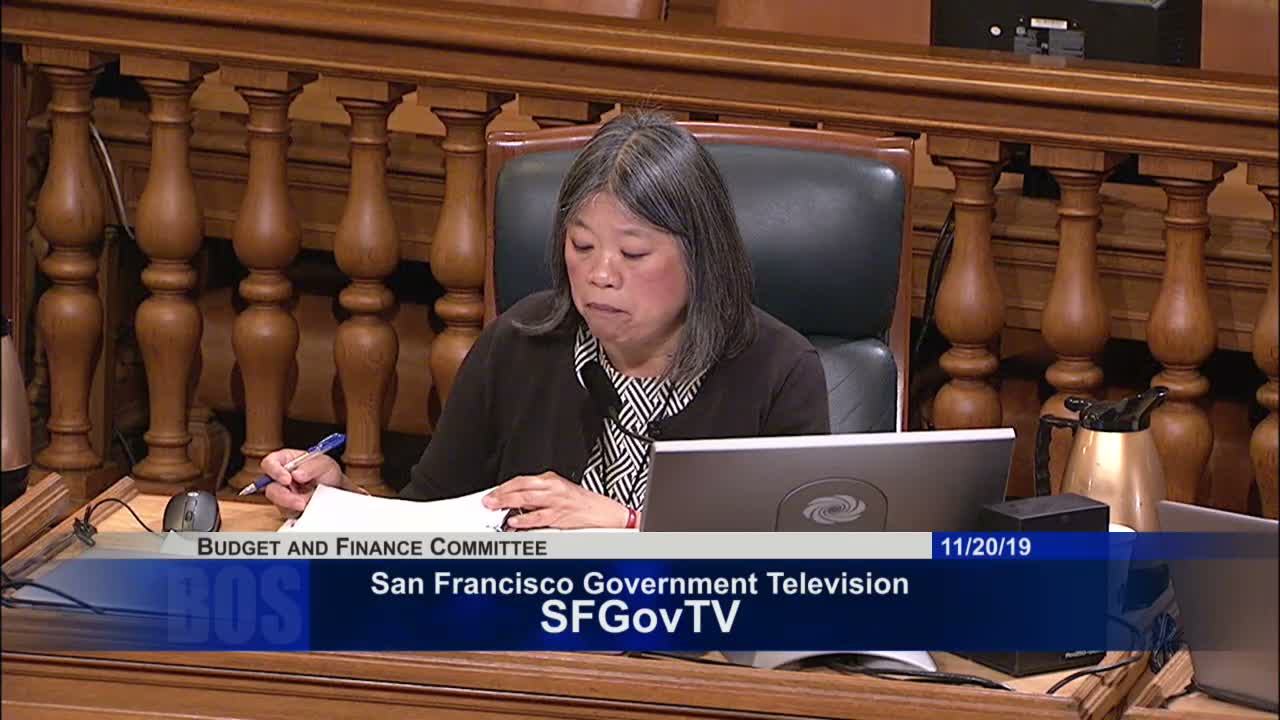
A San Francisco Board of Supervisors committee voted to forward an ordinance creating an Office of Emerging Technology (OET) in Public Works, aimed at reviewing pilot programs, coordinating permitting, and evaluating safety, privacy and equity impacts before new technologies operate on public infrastructure.
San Francisco supervisors on the committee voted to send an ordinance to the full Board creating an Office of Emerging Technology (OET) within the Department of Public Works, a centralized office designed to review emerging technologies proposed for public spaces and to run limited-duration pilot permits.
President Norman Yee said the proposal is the product of nearly two years of work and a broad working group, arguing the city must be proactive. "With this legislation, San Francisco will be the first in the nation, I believe maybe even the first in the world that will create a regulatory framework and will establish an office of emerging technology, or what we call OET," he said, framing the office as a means to balance innovation with public safety and equity.
City Administrator Naomi Kelly told the committee the OET follows a Board resolution that convened an open working group and produced 12 guiding principles and five core recommendations: create a single front door for applicants; improve company–community communications; conduct safety testing and evaluations; support responsive policy development on equity, accessibility, privacy and data ethics; and establish forecasting capacity to anticipate future technologies.
Deborah Lutzky of Public Works defined "emerging technology" for the office as physical devices or systems that use city property or rights of way and lack an established permitting authority. She outlined a process in which applicants bring proposals to the OET for early engagement; the office would coordinate interagency review, require public engagement plans, issue limited-duration pilot approvals when supported, and produce pilot evaluation reports and an annual summary to the Board.
The Budget Analyst told supervisors the Board had previously appropriated $250,000 toward the office and described the ordinance’s mechanism for setting permit fees, penalties for noncompliance and authority for the Director of Public Works to adopt pilot rules.
Public testimony was broadly supportive. "Walk San Francisco was a participant in the working group," said Jody Maderas, urging public notice of applications so neighborhood advocates can work with companies. Cammy Blackstone of AT&T asked staff to confirm that technologies already subject to federal, state or local review — notably telecom and 5G deployments — would not be swept into OET review. Victor Meyer of Postmates urged clear, aggregated data-sharing processes that protect trade secrets while giving the city usable information.
The committee approved forwarding the ordinance to the full Board with a positive recommendation; the motion was taken "without objection." The office’s proposed duties include front-door permitting, interdepartmental coordination, public engagement, pilot approvals with reporting, and an annual report back to the Board.
The measure will next be considered at the full Board meeting.