Get Full Government Meeting Transcripts, Videos, & Alerts Forever!
Get email alerts on the Housing Homelessness Hearing topic
No spam. Unsubscribe anytime.
Supervisors press housing and homeless services for data, prevention and funding as providers seek $313.9M
Summary
In a lengthy issue hearing, the Board—s Budget & Finance Committee heard BLA, HSH and MOHCD presenters on gaps in housing production and homelessness response, pressed for clearer data on inflow and prevention, and received a consolidated provider ask of roughly $313.9 million for subsidies, emergency services and prevention.
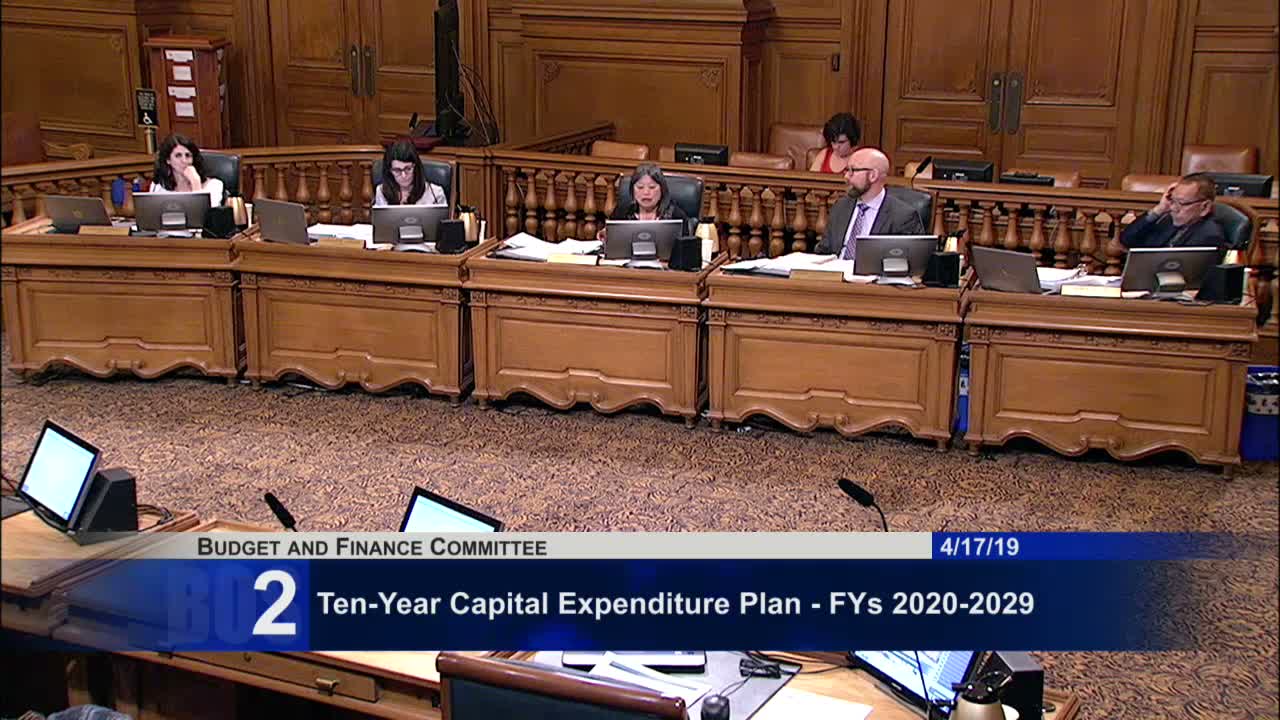
San Francisco—s Budget and Finance Committee spent most of its April hearing on an extensive review of affordable housing and homelessness needs, pressing city agencies for clearer data about newly homeless inflow and how prevention dollars will be deployed while provider groups sought a $313.9 million package to expand subsidies, emergency services and targeted supports.
The Budget and Legislative Analyst (BLA) summarized the city—s housing picture, citing a regional seven‑year goal set by the Association of Bay Area Governments and noting that San Francisco has permitted far fewer units than required, especially for very low‑income households. Severn Campbell of the BLA told supervisors the city relies primarily on three funding sources for site acquisition and gap financing: the Housing Trust Fund (general fund allocations), the Affordable Housing Fund (developer impact and linkage fees) and voter‑approved general obligation bonds. Campbell said inclusionary fee revenue fell roughly from $100 million in 2017 to about $50 million in 2018, reducing a key recurring source for local affordable development.
Jeff Kositzky, director of the Department of Homelessness and Supportive Housing (HSH), presented the department—s inventory and priorities, reporting more than "7,700 units of permanent supportive housing, as well as approximately 2,600 temporary shelter beds," and that the system is providing shelter or housing services for roughly "13,000 individuals" on any given night. Kositzky outlined HSH—s strategy: implementing a coordinated entry system (required by HUD), merging multiple data systems, expanding problem‑solving and prevention grants and pursuing a mayoral goal to open 1,000 new shelter beds (with an initial phase to add 500 beds in 2019). He described the department—s early problem‑solving pilot as "willing to, are able to spend up to $5,000 per person," but noted the pilot—s average so far has been about $1,000 per person and that more time is needed to evaluate effectiveness.
Supervisors pressed for more precise breakdowns. "How many units are in each affordability range—30%, 50%, 80% AMI?" Supervisor Norman Yee asked of MOHCD; Kate Hartley, director of the Mayor—s Office of Housing and Community Development, said small‑sites and 100% affordable projects are both in the inventory and agreed to provide neighborhood‑level lists and income breakdowns for preserved and pipeline units. On inflow, Kositzky described the statistical method HSH uses to annualize point‑in‑time results and estimated roughly 8,000 people become newly homeless in the city in a year, a figure supervisors said they wanted broken down by cause so prevention investments can be targeted.
Provider coalition HESPA (Homeless Emergency Service Providers Association) presented a consolidated request for about $313.9 million for FY2019–20 and FY2020–21. Mary Kate Bacalau of HESPA said their ask would fund housing subsidies for roughly 338 households and allocate about 40% of the total to housing subsidies, 27% to prevention services, 12% to mental‑health services, 11% to emergency services and 6% to workforce development. Providers urged expansion of on‑demand rental subsidies for seniors and adults with disabilities, targeted subsidies for transgender people (HESPA proposed 75 annual rent subsidies for transgender San Franciscans), and increased funding for shelter client advocates and operating support for supportive housing.
Public testimony stretched for hours. Service providers and people with lived experience described eviction defense successes, the need for permanent subsidies for seniors and people with disabilities, and gaps in capacity and staffing among nonprofits that operate supportive housing. Several speakers stressed the limits of relying on developer fees and one‑time bonds and urged recurring funding mechanisms and better data to measure which prevention strategies reduce new entries to homelessness.
The committee took no final appropriations at the hearing; Chair Feuer moved to "file" the hearing record at the close of testimony. Supervisors asked staff and the presenting agencies to return with the requested breakdowns on incomes served, site lists by neighborhood, and cross‑tabulation of newly homeless individuals by cause to inform budget deliberations.