Get Full Government Meeting Transcripts, Videos, & Alerts Forever!
Get email alerts on the Homelessness Funding topic
No spam. Unsubscribe anytime.
Mayor and supervisors outline $30 million rebalancing to restore homelessness services and add eviction legal aid
Summary
The mayor—s office presented a rebalancing plan that would add $30 million over two years for homelessness services — navigation centers, rental subsidies, rapid rehousing, and eviction-legal assistance — funded largely by one-time state emergency aid and savings from lower retiree health rates.
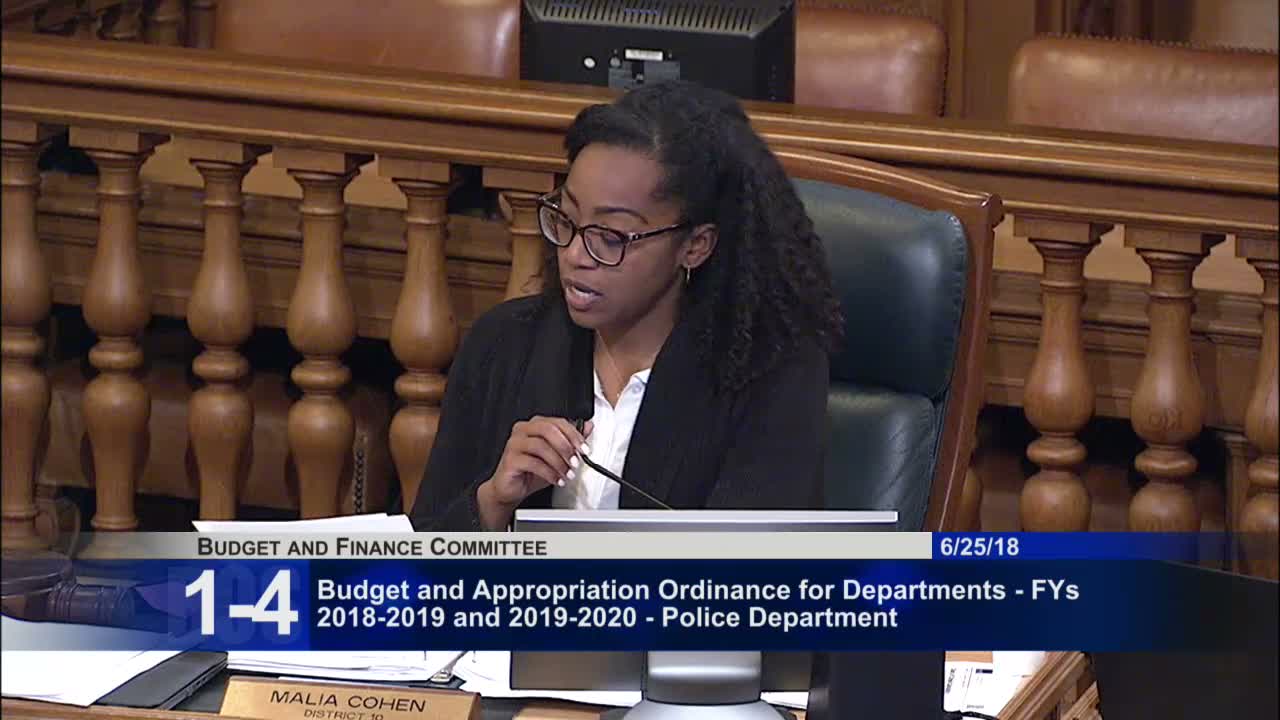
The mayor—s budget team presented a rebalancing proposal to the Budget & Finance Committee that would restore and expand homelessness investments after the failure of a local ballot measure. The package totals roughly $30 million over two years and draws on three main sources: lower-than-anticipated retiree health rates approved by the Health Service System board, projected one-time state emergency homeless aid (estimated at $27.7 million pending the governor—s approval), and an increase in federal/state Emergency Solutions Grant funding.
The plan prioritizes continuity for programs funded in FY18–19 that lacked identified FY19–20 funding, adds a Transitional-Age-Youth (TAY) navigation center, invests in rapid rehousing for adults and TAY populations, creates a flexible housing subsidy pool and provides $500,000 annually for eviction legal defense consistent with Proposition F. MOHCD representatives said the package would produce hundreds of housing opportunities and rental assistance units and fund eviction legal services up to 120% AMI.
The committee accepted the proposed rebalancing for the Department of Homelessness & Supportive Housing and MOHCD in committee action and directed the mayor—s office to transmit technical adjustments to enact the allocations. Supervisors asked staff to provide additional detail and to reconcile these supplemental allocations with the mayor—s baseline budget so the full impact across departments is visible before final adoption.