Get Full Government Meeting Transcripts, Videos, & Alerts Forever!
Get email alerts on the Library Budget Rfid topic
No spam. Unsubscribe anytime.
Library budget highlights renovations, digital lending and sparks privacy debate over proposed RFID system
Summary
San Francisco Public Library presented a two‑year budget focused on capital renovations, expanded hours and digital investments but supervisors and privacy advocates raised objections to a proposed $3.4M RFID rollout, citing privacy, cost and safety trade‑offs.
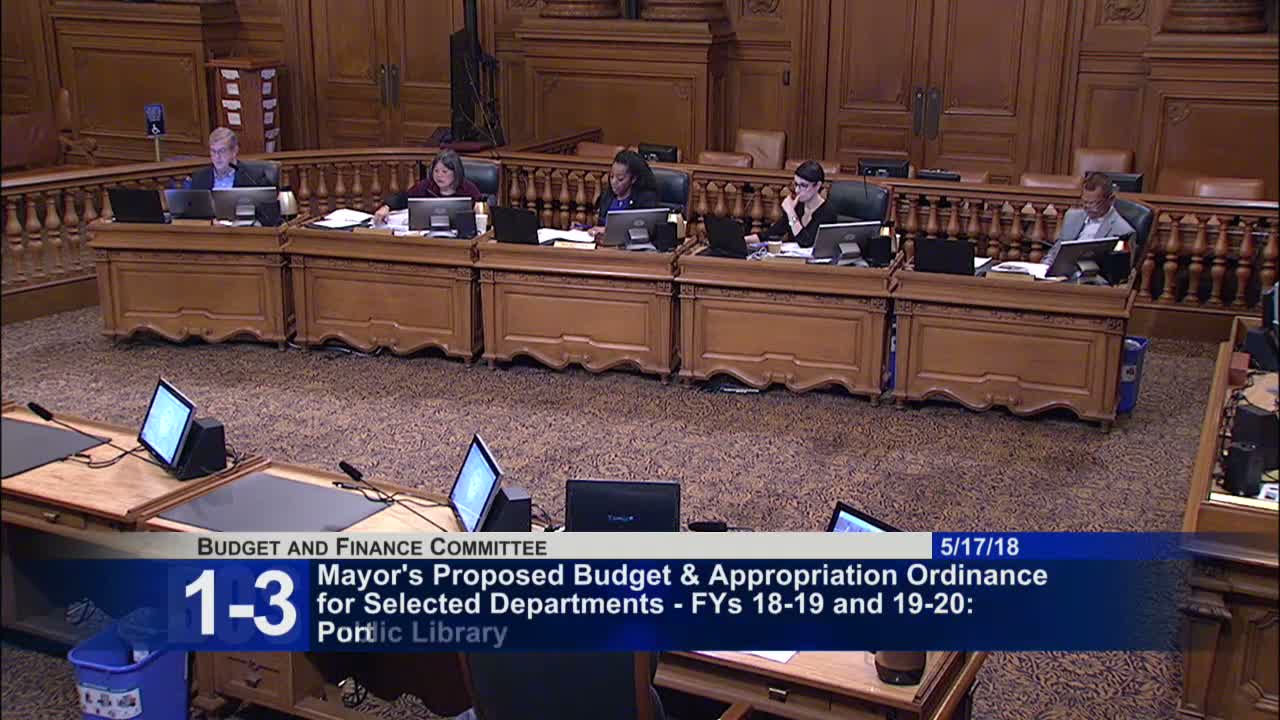
SAN FRANCISCO — The city librarian presented a FY19‑20 budget that continues seven‑day service, expands capital investments for branch renovations and allocates funds to digital inclusion programs, but the plan to implement RFID technology provoked sharp questions from supervisors and public advocates.
Michael Lambert outlined priorities including keeping all 28 branches open seven days a week, a proposed $19.8 million Mission branch renovation and investments in e‑collections and device lending. "All 28 library locations are now open 7 days a week," Lambert said, and he described capital investments and a plan to modernize checkout systems.
The library proposed an RFID transition to replace aging checkout equipment and to capture operating efficiencies. Library staff said RFID would reduce staff time spent on check‑in/out by an estimated 15,000 hours annually and free staff to provide more direct public programming; they emphasized that no jobs would be eliminated and said labor was engaged in conditional endorsement discussions.
But supervisors and public commenters pushed back on privacy and safety concerns. Supervisor Sheehy and others questioned whether RFID is the right near‑term priority given safety concerns at some branches. Sheehy said she did not support the RFID allocation and argued the library should instead prioritize measures that make branches safer and more accessible.
City Librarian Lambert responded that library staff engaged with privacy advocates and technologists and that "there's absolutely no threat to patron privacy with RFID," offering to bring a more detailed technical briefing and documentation to the committee.
Outside advocates echoed privacy concerns. Peter Warfield of the Library Users Association and other public commenters cited letters from national civil‑liberties groups and highlighted risks they associate with RFID systems in libraries.
Supervisors asked the library to return with detailed ROI, staffing and privacy mitigation plans before budget adoption; no final appropriation or policy decision was made at this hearing.