Get Full Government Meeting Transcripts, Videos, & Alerts Forever!
Get email alerts on the Five Year Financial Plan topic
No spam. Unsubscribe anytime.
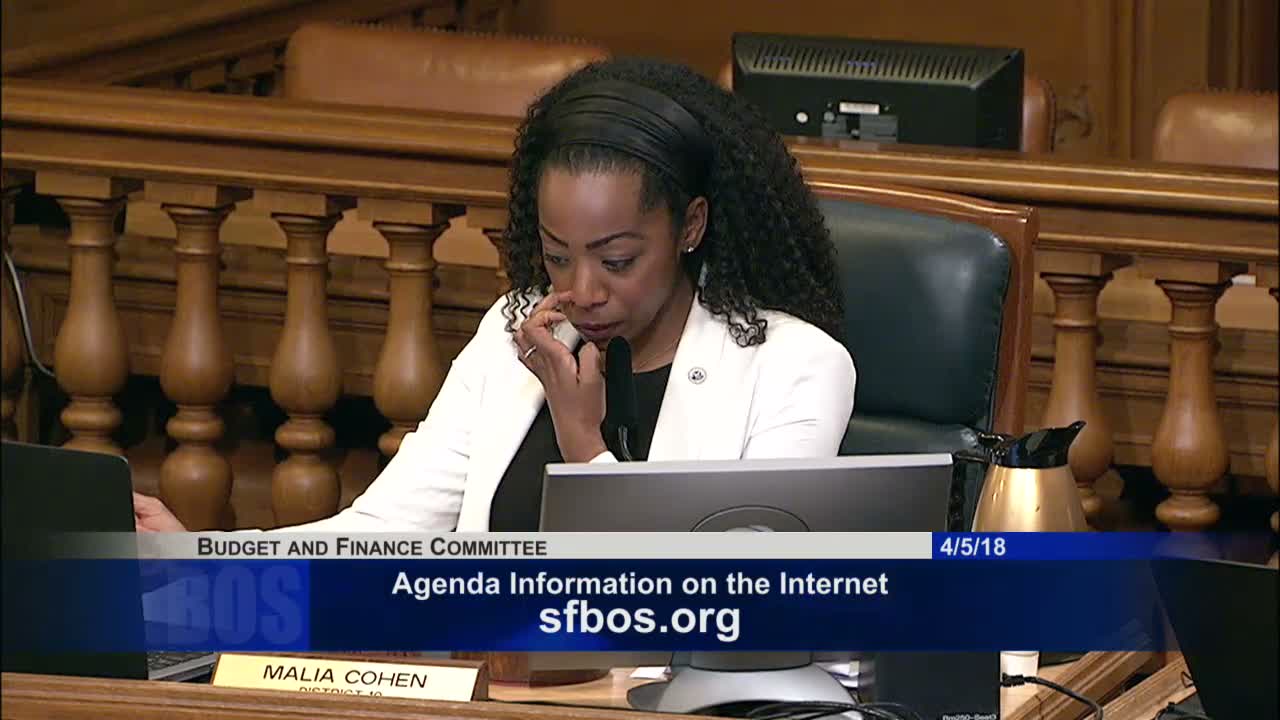
Budget and Finance Committee hears March revision to five-year financial plan; two-year shortfall reduced, long-term gap remains
Summary
The Mayor's Budget Office and controller presented a March revision that narrows a two-year shortfall to about $137 million but warns of a structural deficit exceeding $600 million in later years driven by pensions, health care and IHSS cost shifts; the committee continued the item to the call of the chair.
The Budget and Finance Committee on Wednesday heard a March update to the Mayor's and Controller's joint five‑year financial plan that narrows the immediate two‑year shortfall but leaves a large structural gap in later years.
"The March update reduces the upcoming two‑year deficit to a $137,000,000," Kelly Kirkpatrick, acting budget director for the mayor, told the committee during a presentation prepared jointly with the controller's office and the Budget and Legislative Analyst's office. She cautioned the committee that the improvement relies heavily on one‑time sources and that "there's still a really significant deficit in years 3 and 4, reaching nearly over $600,000,000."
Kirkpatrick said the March revision reflects several changes since December, most notably the addition of more than $60,000,000 in one‑time fund balance identified in the controller's six‑month report and modest upward revisions to ongoing revenue tied to property, business and hotel taxes. Those gains are partially offset, she said, by slower growth in sales and parking taxes and ongoing cost pressures.
"One‑time fund balance," Kirkpatrick said, "is current‑year revenue better than budgeted or departmental savings" and is a primary reason the two‑year outlook has improved.
Committee members pressed officials for detail on the plan's cost drivers. The presentation identified three persistent pressures: rising pension obligations after recent actuarial updates; health care costs projected to grow by high single digits for employees and retirees; and state cost shifts in the In‑Home Supportive Services (IHSS) program. Kirkpatrick said the IHSS change is "growing our IHSS cost by an additional 14,700,000.0, bringing just the two‑year increase ... to over a $100,000,000 more than we had anticipated last December."
The presentation also flagged programmatic and operational items that will affect future budgets, including the need to replenish the elections campaign fund in advance of a potential June mayoral election and the annualization of recent federal supplemental funding for the Department of Public Health and a $3,500,000 supplemental to support immigration‑related legal defense across the public defender's office and the Mayor's Office of Housing and Community Development.
During questioning, officials said they would provide a breakdown of the pension‑related savings and other actuarial items cited in the report. Michelle Alersma of the controller's office told supervisors the improved near‑term revenue picture was driven in part by the assessor's office processing supplemental and escape assessments faster than expected and by Department of Public Health revenue dynamics.
A member of the public who spoke during the two‑minute public comment period urged the city to reduce public transit fares to spur consumer spending and "offset the reduced transit revenue with increased sales tax revenue." The commenter also raised questions about department budget accuracy.
With no further questions, the Chair moved to continue the item to the call of the chair; Supervisor Norman Yee seconded the motion and it was taken without objection. The committee had no additional business and adjourned afterward.
The committee asked staff to provide detailed follow‑up on pension assumption changes, the precise composition of the one‑time fund balance, and a reconciliation showing how the March revisions compare with the December projection. No final policy action was taken at this meeting; the item was continued for later consideration.