Get Full Government Meeting Transcripts, Videos, & Alerts Forever!
Get email alerts on the Public Safety Budget topic
No spam. Unsubscribe anytime.
Supervisors weigh police staffing, analytics and prevention as property crime rises
Summary
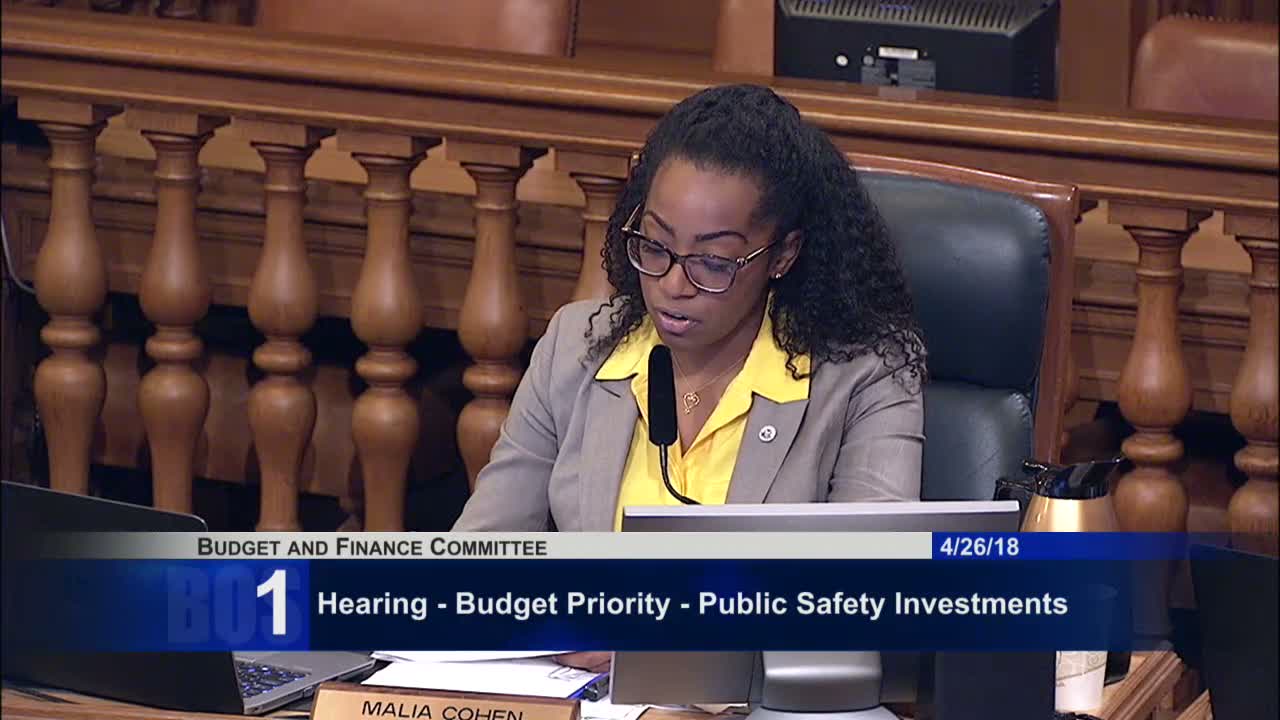
At a Budget & Finance Committee hearing, city analysts, SFPD and the district attorney outlined a mix of enforcement and prevention proposals to address rising property crime—particularly auto burglaries—while community groups pushed for investments in youth leadership and alternatives to incarceration.
San Francisco supervisors spent a full afternoon probing how to balance policing, prosecution and prevention after officials described a sustained rise in property crime, including a recent surge in vehicle break-ins.
Controller’s Office program manager Natasha Michal told the committee the city’s crime dashboards show relatively stable violent crime but an upward trend in property crime, and that police response targets (a four‑minute goal for priority calls) are currently averaging slightly more than five minutes. The Budget Legislative Analyst noted San Francisco’s property‑crime clearance rates lag national averages and that police overtime and staffing patterns merit further audit and civilianization analysis.
SFPD Chief Bill Scott framed a strategy that mixes visible patrols and data‑driven investigations. “We have an epidemic of car break ins,” he said, and described expanded foot‑patrol assignments, a centralized general‑crimes unit to investigate serial burglars, and a new gun‑crime investigation center that links ballistics to national databases.
District Attorney George Gascon urged matching prosecutorial capacity with increased policing. He said his office’s Case Support Unit (CSU) has had success connecting geographically dispersed incidents to build larger cases: prosecutors recently indicted a serial auto burglar on 20 counts and assembled a separate multi‑jurisdictional case involving 12 suspects and roughly $3 million in residential losses. To handle an anticipated rise in case filings, Gascon requested additional prosecutors, investigators and analysts for both an auto‑burglary team and an expanded human‑trafficking unit.
The Sheriff’s Department proposed a smaller, targeted investment to enforce firearms surrender tied to domestic‑violence temporary restraining orders (TROs). Sheriff’s staff told supervisors they served “just over 250” DV TROs last year but recovered no firearms as part of that process; the department estimated a San Mateo‑style compliance and retrieval program would require roughly 2.5 deputies and half a clerk to start.
Community groups and youth leaders urged a different emphasis: prevention through youth leadership, jobs and housing. The Budget Justice Coalition and other speakers asked the city to route $300,000 through DCYF for expanded youth organizing and leadership programs and to prioritize alternatives to incarceration, including pre‑arrest diversion, mental‑health supports and housing.
No formal budget votes occurred at the hearing. Supervisors signaled support for follow‑up: a narrowly scoped Sheriff pilot to retrieve firearms tied to TROs, careful review of large SFPD staffing requests pending the mayor’s staffing task force and forthcoming audits, and increased scrutiny of DA and prevention funding requests as the budget process advances.