Get Full Government Meeting Transcripts, Videos, & Alerts Forever!
Get email alerts on the Mayor Budget topic
No spam. Unsubscribe anytime.
Mayor Lee proposes two-year $10 billion budget, highlights homelessness and reserves
Summary
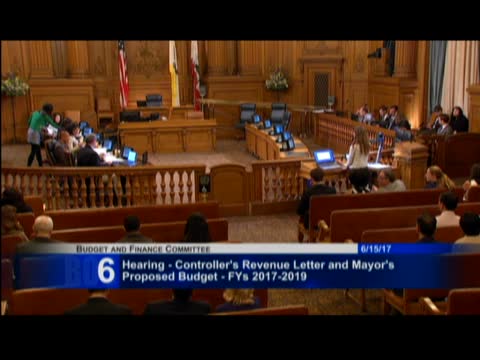
At a Budget & Finance hearing the mayor's budget director and the city controller presented a two-year, roughly $10 billion budget emphasizing homelessness investments, increased reserves for federal/state risks, infrastructure spending and constrained departmental growth; the controller described revenue assumptions and noted heavy reliance on one-time balances.
San Francisco's Mayoral Budget Office and the Controller laid out the mayor's two-year proposed operating and capital plan and the controller's revenue letter at a Budget & Finance Committee hearing.
Melissa Whitehouse, the mayor's budget director, summarized the administration's approach to closing an earlier projected $288 million deficit through revenue improvements (including additional road-repaving funds allocated under state law) and by constraining departmental growth. The mayor's budget emphasizes three priorities: reducing harm on the streets, increasing homelessness services and shelter capacity, and investing in infrastructure and maintenance.
Whitehouse said the budget sets aside new reserves: a $50 million Affordable Care Act contingency reserve and a $10 million state/federal impacts reserve to respond to potential federal or state funding changes. She also highlighted $172 new supportive housing units in the two-year plan, expanded harm-reduction service hours, conservatorship beds for people with severe mental illness, and added funding for navigation centers and outreach.
Controller Ben Rosenfield presented the statutory revenue review. He said the mayor's tax assumptions are reasonable and underscore a picture of slowing but continuing local growth: property and business taxes are important drivers; property-transfer tax remains the most sensitive and volatile forecast item. The controller also warned that the city's cumulative reserve levels cover only a portion of the revenue shortfall that would accompany a typical recession and that state-level shifts (such as IHSS and CalWORKs changes) may exceed current budget assumptions.
Committee members pressed staff on specifics, including the size and timing of reserves, the assumptions behind projected operating costs for newly purchased SFPUC facility debt service, and the impact of shifting bond proceeds on Muni projects. The hearing concluded with the committee filing the controller's revenue letter and scheduling follow-ups for departmental budget hearings.
What happens next: The committee will continue department-level budget hearings and return to items that require additional policy choices (for example, vehicle replacement exemptions and staffing proposals for newly established offices) before final adoption by the full Board.
Source: presentations and the controller's revenue letter delivered to the Budget & Finance Committee on June 14, 2017.