Get Full Government Meeting Transcripts, Videos, & Alerts Forever!
Get email alerts on the Ethics Ordinance topic
No spam. Unsubscribe anytime.
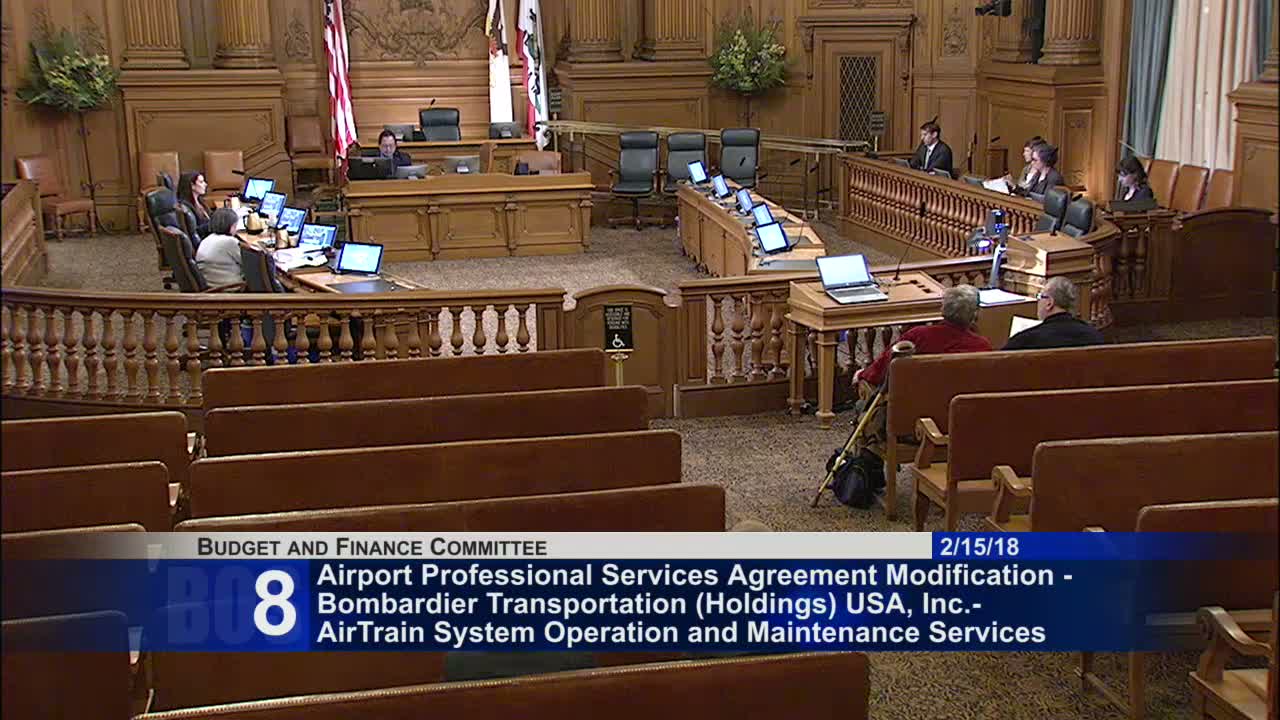
Supervisors split over ethics ordinance language; committee duplicates file and continues review
Summary
After an extended discussion and public comment, the Budget & Finance Committee agreed to duplicate the campaign and government conduct code into two versions (the Ethics Commission's staff version and a committee-amended version) and continued both to the call of the chair for further coordination with the Ethics Commission.
The Budget & Finance Committee spent the bulk of its meeting on proposed revisions to the campaign and government conduct code that address campaign finance, bundling disclosures, recusal rules and behested-payment disclosures.
Ethics Commission staff (Kyle Kundert and Patrick Ford) told the committee they revised the draft to make the contributor card voluntary, trim bundling disclosures to identify who the bundler is and which contributions were bundled (removing a requirement to disclose whether the bundler attempted to influence the recipient), and remove a land-use-specific prohibition from this ordinance so the commission can pursue it in separate legislation. They also said the proposed code now ties "interested party" behested-payment disclosures to a financial interest as defined by the state Political Reform Act and retains "reasonably be expected to influence" language for conflict-of-interest provisions while signaling that regulations can further clarify de minimis items.
Several supervisors offered written and verbal amendments. Supervisor Katy Tang proposed a suite of drafting changes intended to clarify compliance and enforceability; Supervisor Aaron Peskin proposed removing the ordinance's operative date so portions could take effect immediately upon the mayor's signature, offered alternative language for the repeated-recusal provision and proposed adding a major-donor disclosure section requiring additional reporting by donors to Super PACs. Peskin urged the board to consider a joint meeting with the Ethics Commission to expedite agreement on a final ordinance.
Public commenters provided mixed views: Debbie Lerman urged more stakeholder engagement and warned that versions had changed rapidly, limiting meaningful review; Cecilia Chen (Northern California Grantmakers) urged collaboration and highlighted potential nonprofit impacts; Torin Lewis (Alliance for Justice) and others urged care on repeated-recusal rules to avoid unintended consequences for nonprofit participation.
Deputy City Attorney John Givner reminded the committee that both the Ethics Commission and the Board must ultimately pass identical language (the Ethics Commission by a four-fifths vote and the Board by eight of 11). Committee members agreed to duplicate the file into two versions: one that incorporates the Ethics Commission staff'recommended amendments and one that contains the committee/supervisor amendments (the committee's "committee version"). The committee adopted the supervisor amendments for the committee's file, duplicated the ethics file, and continued both items to the call of the chair. The clerk will include the Ethics Commission packet and the committee amendments in both files for future consideration.
What happens next: The Ethics Commission will receive the committee's transmitted files for consideration; both bodies must adopt identical text for the ordinance to move forward to the Board for final action.