Get Full Government Meeting Transcripts, Videos, & Alerts Forever!
Get email alerts on the Local Business Procurement topic
No spam. Unsubscribe anytime.
Committee backs three-year pilot to boost local-business participation on $20M+ city contracts
Summary
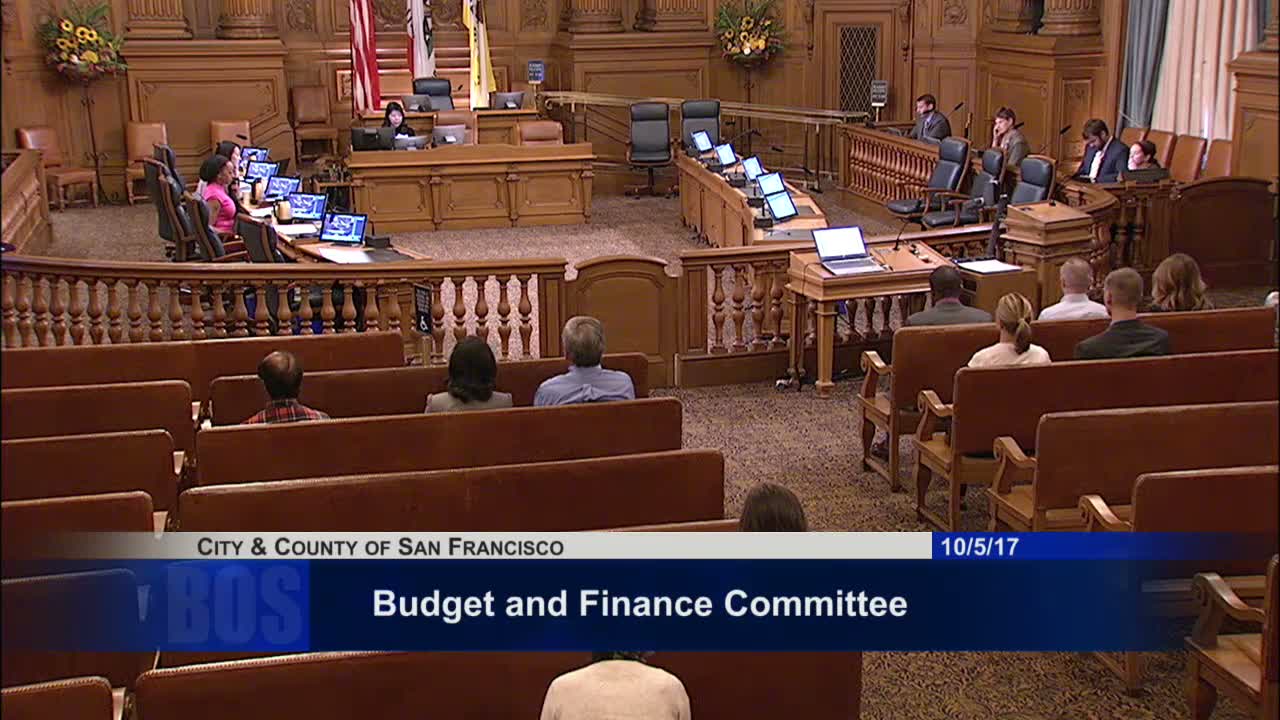
The Budget and Finance Committee recommended a three-year, optional Local Business Enterprise pilot that would give scoring bonuses for joint ventures with certified micro/small local businesses and for local participation in core disciplines on large professional services and design‑build contracts.
Malia Cohen, chair of the San Francisco Budget and Finance Committee, moved the panel through an ordinance to pilot incentives intended to raise local business participation on large city contracts. Ivy Fine, director of the Contract Administration Bureau at the San Francisco Public Utilities Commission, presented the proposal as a three-year, optional program departments may choose to use on contracts over $20,000,000.
Fine said the pilot has two incentive tracks: a joint-venture rating bonus of 2%–6% for professional services, architecture/engineering and design‑build contracts (applied according to the level of local-business participation at the prime/design level), and a core-discipline incentive that allows departments to weight local-business participation for specified core trades on a contract. "The goal of this 3 year pilot program is to increase local business participation on large contracts," Fine said.
Jeff Neumeier, chief development officer at San Francisco International Airport, described results from an airport pilot, saying the airport has used the incentive program on 14 contracts totaling about $2.3 billion, with average subcontracting goals of roughly 20–24% and increases in local-business participation up to about 32% on those contracts. He said smaller firms in the program have worked alongside larger firms, gained capacity and in some cases returned for subsequent contracts.
Supervisor Katie Tang asked how the City would evaluate the pilot and whether it could be made permanent. Fine responded departments would track participation and report results at the end of the three-year period and could return with a request to amend the Administrative Code. After brief questions and no public comment, Supervisor Tang moved to forward the ordinance to the full Board of Supervisors with a positive recommendation; the committee approved the recommendation without objection. The committee’s action is a recommendation to the full Board; final approval would occur in a subsequent Board vote.