Get Full Government Meeting Transcripts, Videos, & Alerts Forever!
Get email alerts on the Budget Baselines topic
No spam. Unsubscribe anytime.
Supervisors hear controller: voter-mandated 'baselines' now tie up roughly 30% of San Francisco's general fund
Summary
A Budget & Finance Committee hearing on voter-mandated spending requirements showed baselines grew from about $200 million in the mid-1990s to roughly $1.2–$1.6 billion projected in coming years, reducing annual discretionary budget flexibility. Committee members asked staff for policy options including expirations and suspension triggers.
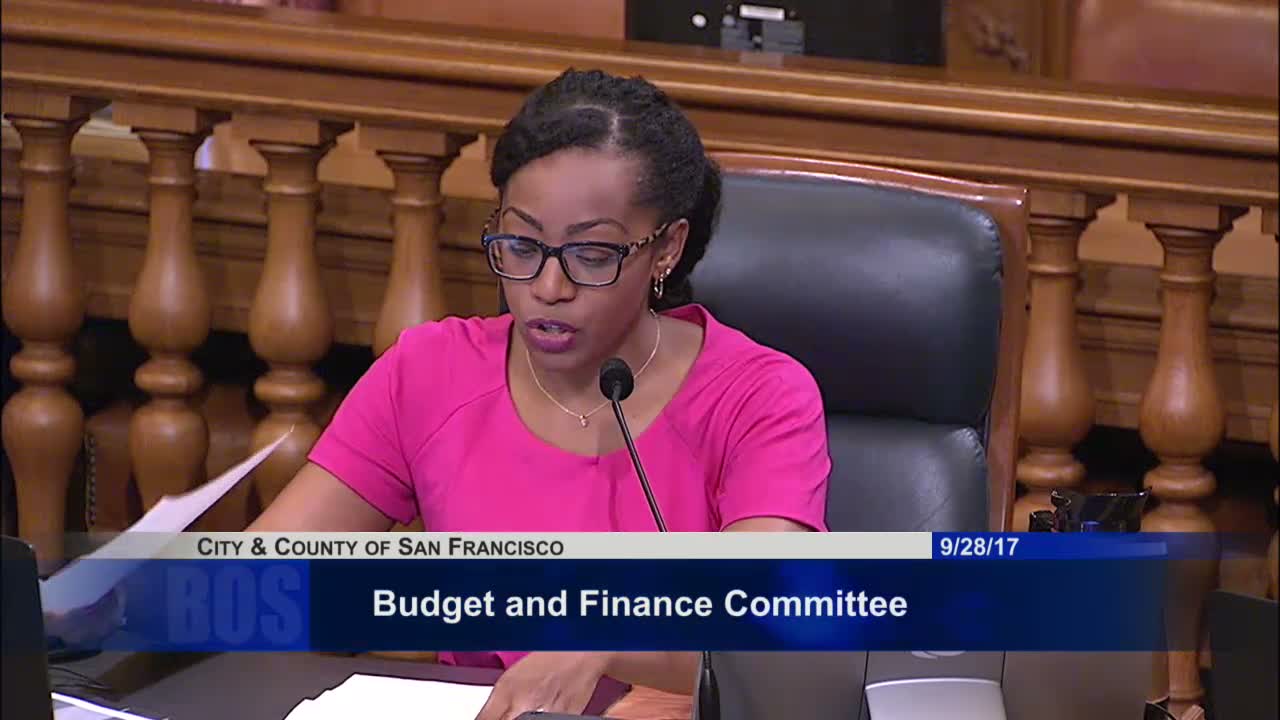
The Budget and Finance Committee on [date not specified] heard a controller’s office review showing voter-mandated spending requirements — often called "baselines" or set-asides — have grown materially and now occupy a substantial share of the city’s general fund.
Supervisor Aaron Peskin, a co-sponsor of the hearing, said the change is dramatic: "The baseline spending has increased from about $200,000,000 in the mid nineties to $1,200,000,000 today," and said while the set-asides fund worthy causes, they constrain policymakers’ annual choices. Supervisor Jane Tang, the other sponsor, said the study’s findings were "very telling" and announced plans to pursue policies to address baselines and set-asides.
Michelle Elersema of the Controller’s Office said the office’s five-year financial plan projects baseline spending could grow to about $1.6 billion in fiscal-year 2022 and that baselines have risen as a share of the general fund from just under 15% to roughly 30%: "As a proportion of the general fund budget, that has grown from just under 15%. It's doubled to 30%." She told the committee the presentation tracked 19 binding local spending requirements and contrasted San Francisco’s experience with peers that have far fewer voter-mandated obligations.
The controller’s briefing showed the largest current baseline commitments are to the municipal transit agency (MTA) and youth/children’s services: MTA baselines total on the order of $420 million while youth-related baselines are "just under $400 million," according to the office’s figures.
Elersema said more recent baselines sometimes include design features intended to preserve some policy flexibility, such as explicit expiration dates, suspension triggers tied to fiscal stress, and provisions returning unused baseline-funded amounts to the general fund. She cited the library baseline as an example where unspent baseline-funded portions may be reclaimed; the office estimated recent returns to the general fund in those cases at roughly $5–$7 million per year.
Committee members pressed staff on options for changing existing baselines. Supervisor Norman Yee asked whether any baselines were paired with new revenue on the same ballot; Controller Ben Rosenfield said recent examples paired a transfer tax increase with a street-tree baseline and a business tax increase with an affordable-housing baseline. Yee also warned against assuming that removing baselines would free all previously dedicated dollars for other uses, noting many services received funding in prior budgets.
Supervisor Tang moved to file the hearing. Chair Malia Cohen accepted the motion and it was filed "without objection." Tang and Peskin said next steps will include policy discussions about expirations, suspension triggers and possible ballot measures to address chosen baselines.
The committee did not adopt any substantive changes at the hearing; the motion was to file the report and begin further policy work.