Get Full Government Meeting Transcripts, Videos, & Alerts Forever!
Get email alerts on the Fleet Zev Policy topic
No spam. Unsubscribe anytime.
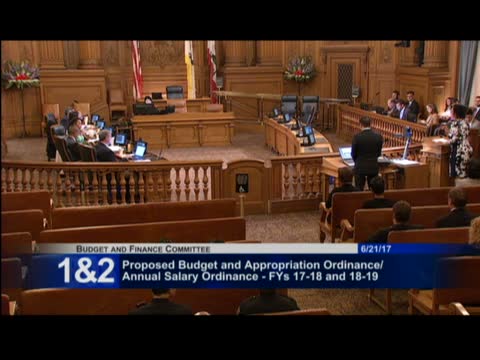
Budget panel grills city on fleet replacements, charging infrastructure and ZEV rules
Summary
Supervisors used a biennial budget hearing to press departments on which vehicles they planned to replace, where those vehicles park (city‑owned lots affect ZEV requirements), and how the city will meet a new zero‑emission vehicle procurement policy. Departments reported mixed ability to procure EVs depending on vehicle type, safety exemptions, and charging access.
The Budget and Finance Committee spent substantial time on the proposed biennial budget's vehicle requests and the city's new zero‑emission vehicle (ZEV) requirements.
City Administrator Naomi Kelly presented a high‑level fleet overview and a procurement plan the city will submit July 1 to implement the ZEV ordinance. "The plan will identify options to expand our ZEVs in line with the 0 emissions vehicle requirements ordinance," she said, and described a centralized fleet management review team to evaluate vehicle requests.
Supervisors pressed departments for operational details: whether vehicles are replacement or additions, vehicle ages and mileage, whether they are parked on city‑owned property (which strengthens EV procurement requirements), and charging access. Departments reported mixed status:
- Department of Building Inspection (Tyrus Madison) said they are replacing about 10 aging compressed natural gas vehicles (12–13 years old) with hybrids and may switch to plug‑in hybrids because most vehicles park on a Caltrans lot. "We could switch the purchase to plug‑in hybrid electric," Madison said.
- The District Attorney—s Office (Christine DeBary) requested four vehicles (three cruisers and one minivan) and acknowledged they would likely apply for public‑safety waivers because no suitable zero‑emission law‑enforcement cruisers are currently available.
- Human Services Agency (Trent Rohrer) requested two replacements and indicated the vehicles would be parked in a city garage with four chargers; HSA said it could convert the replacements to EVs.
Supervisors repeatedly highlighted the role of parking locations: vehicles parked on city lots have stronger ZEV requirements than those parked on private lots (e.g., Caltrans), where installing chargers may be difficult. The committee requested departments work with the City Administrator—s Office and purchasing to prioritize plug‑in hybrids or EVs where feasible and to identify charging infrastructure needs before final budget adoption.
The exchange framed how the budget process will implement the Council—s clean‑vehicle goals while balancing operational needs and safety exemptions.