Get Full Government Meeting Transcripts, Videos, & Alerts Forever!
Get email alerts on the Sfpd Reorg topic
No spam. Unsubscribe anytime.
Supervisors press SFPD chief over new command‑staff additions as DOJ reforms continue
Summary
Chief Bill Scott defended a reorganization that restores two assistant chiefs and adds commanders to implement DOJ reform recommendations. Supervisors pressed for cost data, pension impacts and whether the changes would reduce patrol resources; the committee continued the discussion to the next session for more analysis.
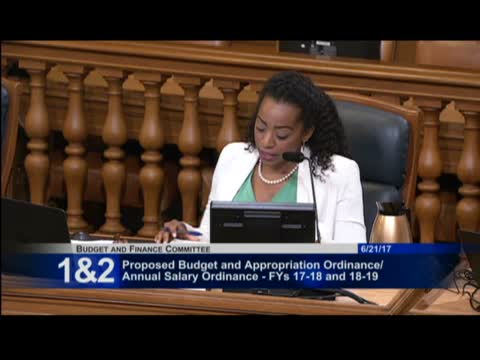
San Francisco Police Chief Bill Scott told the Budget & Finance Committee on June 21 that a revamped command structure — including two assistant chiefs and three new commander positions — was necessary to implement the Department of Justice consent‑decree recommendations and to improve span of control and accountability.
"We created three new commander positions that directly oversee implementation of 67 of the 272 recommendations," Chief Scott said, describing an administrative/operational split to improve supervision of reform work. Catherine McGuire, the department CFO, and Controller Ben Rosenfield provided budget context and cautioned that higher classifications can increase long‑term retirement costs.
Supervisors asked for objective cost data and comparison with peer cities. Supervisor Peskin said the five new command positions and two assistant chiefs appear to add roughly $800,000 in ongoing salary costs and warned the board to consider the long‑term pension impacts. "Higher classifications generally mean people will end their careers at higher salary levels, which will qualify them for richer pensions upon retirement," the Controller said.
Supervisors raised concerns about top‑heaviness and asked how promotions would be backfilled and how the reorganization would affect patrol staffing, given public safety priorities such as vehicle break‑ins. Chief Scott said promotions will create a wave of vacancies but argued the structure is required to sustain reform work and to oversee new responsibilities, including body‑worn camera management, community engagement and professional standards.
Supervisor Peskin proposed a compromise—keeping five currently vacant captain slots unfilled while allowing the new command structure to operate until reforms are implemented—intended to protect patrol resources while giving the chief the management tools he said are necessary. The committee took no final vote on the SFPD reorganization and asked staff to return with detailed cost and pension analyses; the item was continued to the next meeting.