San Francisco plans new navigation centers and rent-subsidy strategy as homelessness count edges down
Loading...
Summary
The new Department of Homelessness & Supportive Housing reported a 1% decline in the city's point-in-time count and presented a FY17–19 plan that funds navigation centers, rapid rehousing, a single coordinated-entry database and capital improvements while placing certain furniture and fixture requests on committee reserve for later review.
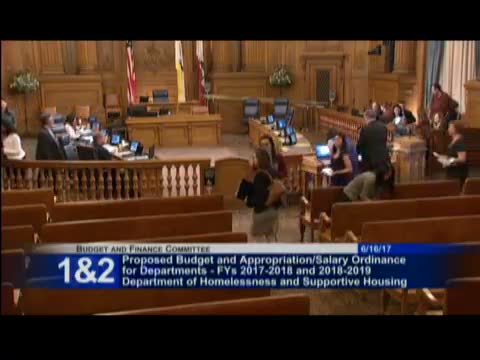
The Department of Homelessness & Supportive Housing presented its FY2017-19 expenditure plan along with the city's 2017 Point-in-Time count results.
Jeff Kositsky told the Budget & Finance Committee the 2017 count shows a citywide 1 percent drop in homelessness with larger declines in family and veteran homelessness. He said the city still faces a rise in single-adult street homelessness and described proposed investments to accelerate exits from homelessness: navigation centers, rapid rehousing and a coordinated-entry database to prioritize housing and match supply with need.
Kositsky summarized key next steps and investments: new navigation centers and a 24/7 resource center, expansion of outreach and encampment-response teams, 172 units of permanent supportive housing in the pipeline, rapid-rehousing and rent subsidy programs, and a "Moving On" program that helps tenants in permanent supportive housing shift to other subsidy types and free up units for new tenants.
Why it matters: The department emphasized exits from homelessness (rapid rehousing, permanent supportive housing and vouchers) as the highest-return strategies and said it will coordinate significant philanthropic and federal funds alongside local resources. Kositsky asked the committee to put $1.7 million requested for furniture, fixtures and equipment for 440 Turk Street on committee reserve pending finalization.
Committee direction: Supervisors pressed for geographic breakdowns to ensure resources are aligned with where people sleep and where services are located. Kositsky said he will produce maps and program-by-population investment details for supervisors. The committee tentatively approved the department plan and asked DHSH for follow-up documentation on location and population alignment.