Get Full Government Meeting Transcripts, Videos, & Alerts Forever!
Get email alerts on the Port Budget topic
No spam. Unsubscribe anytime.
Port of San Francisco warns of multi‑billion seawall need while keeping operations budget balanced
Summary
Port Executive Director Elaine Forbes told the committee the Port is operating within its two‑year budget but faces a capital backlog of about $900 million and a seawall replacement cost 'up to $5 billion'; she flagged declining cruise passengers, Pier 80 auto processing growth plans, and public benefits in upcoming Forest City and Mission Rock approvals.
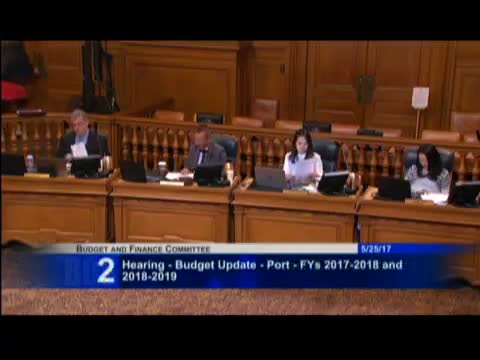
Elaine Forbes, executive director of the Port of San Francisco, briefed the Budget & Finance Committee that the Port’s operations are self‑sustaining but that waterfront infrastructure needs far exceed the Port’s balance sheet.
Forbes listed a capital backlog in the neighborhood of $900,000,000 and described the Seawall Resiliency Project as having a total replacement cost she said could reach up to $5,000,000,000. She said the Port has set aside $16,200,000 to address capital backlog needs and currently budgets about $30,700,000 in capital for the year.
Why it matters: The seawall and other waterfront infrastructure are public‑trust assets that, if not addressed, present both life‑safety and economic risks. Forbes emphasized that the Embarcadero already experiences flooding and called seawall resilience a generational project requiring long‑term planning and community engagement.
Key details
- Revenue and budget posture: Forbes said the Port has roughly $100,000,000 in operating revenues and is operating within its two‑year budget; nonetheless, major waterfront infrastructure requires external funding partnerships with the city and state.
- Seawall Resiliency Project: The seawall was built in 1916, spans roughly three miles and is seismically vulnerable because it was built on fill; Forbes said planning to prioritize urgent repair areas will involve the community and city partners and began describing programmatic steps and outreach.
- Pier 80 and jobs: Forbes described Pier 80’s vehicle processing business (imports/exports) and said the Port currently handles about 17,000 autos there with a target of 50,000 as the business grows. She said related leases include jobs provisions and that the Port’s auto processing partner has delivered on a commitment that 50 percent of certain jobs be filled by Bayview/District 10 residents.
- Development projects: Forbes previewed major approvals coming to the Board in the fall (Forest City and Mission Rock) that include historic restoration spending (~$40,000,000), 14,000 jobs and 3,500 residential units (about 1,200 affordable units), and substantial public benefits such as parks and transit connections.
Committee action and comment: Supervisors sought clarification on Port fees for cruise operations (Forbes explained a per‑passenger charge plus a docking tariff), and asked whether Pier 80’s 50,000 figure referred to new cars — Forbes said the number refers to vehicle processing, not storage, and reiterated job targets for the local community. The committee moved to file the Port hearing and the motion passed with no objections.
Sources: Presentation and Q&A by Elaine Forbes, Executive Director, Port of San Francisco (transcript).