Get Full Government Meeting Transcripts, Videos, & Alerts Forever!
Get email alerts on the Homelessness Coordinated Entry topic
No spam. Unsubscribe anytime.
New homelessness department previews coordinated entry system, $95M No Place Like Home estimate
Summary
Jeff Kositzky presented the Department of Homelessness and Supportive Housing’s strategy to centralize services through coordinated entry, expand navigation centers and short‑term subsidies, and pursue No Place Like Home funding—an estimated $95 million to help build new permanent supportive housing in San Francisco.
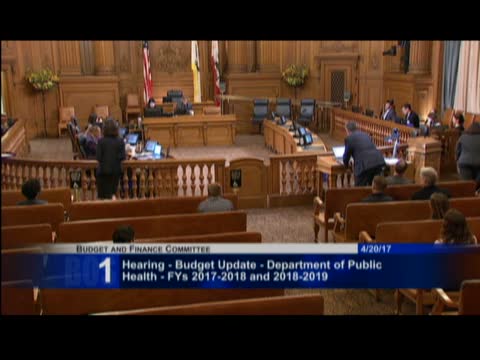
Jeff Kositzky, director at the newly consolidated Department of Homelessness and Supportive Housing, summarized the department’s plan to reorganize fractured service lines into a coordinated entry system that assesses each person once and matches them to the appropriate resource. “Our mission is to make homelessness in San Francisco a rare, brief, and non recurring event,” Kositzky said.
Kositzky told the committee San Francisco’s 2015 point‑in‑time count observed nearly 7,000 people experiencing homelessness, about 48 percent of whom were unsheltered. He said the current system is “waiting‑list based” with multiple access points and inconsistent assessments; coordinated entry will centralize triage, track clients in a single data system, and use acuity and length of homelessness to prioritize permanent supportive housing placements.
The presentation listed recent results and near‑term milestones: 154 new units for chronically homeless adults and veterans since the new department opened, a 93‑bed navigation center at 12th and Market (69 percent of residents found permanent exits), resolution of multiple large encampments, and a pilot “Moving On” initiative that helps people in permanent supportive housing transition to standard housing using Housing Choice (Section 8) vouchers. Kositzky said the department currently has access to about 350 Section 8 vouchers it can deploy.
On financing, Kositzky flagged a state program called No Place Like Home and estimated San Francisco could access approximately $95 million in capital to build new permanent supportive housing; DHSH plans to apply for an allocation rather than project‑by‑project awards and will partner with the mayor’s housing office on underwriting. He also noted a $2.8 million, three‑year federal grant to address youth homelessness and said the department will continue seeking federal and philanthropic support and regional coordination.
Supervisors asked for more granular exit and cohort data, clarity about encampment resolutions, and a district‑by‑district breakdown of planned navigation centers; Kositzky said data migration to the new system will enable daily reporting and more precise performance metrics once implemented. He emphasized the department’s ongoing need for temporary shelter beds—estimating roughly another 1,000 beds would be required to meet current demand—and said the bulk of DHSH’s base budget (stated in the hearing as about $209 million) is used for housing and subsidies (approximately 71 percent).
After public comment (none on record for this item), the committee filed the hearing without objection. Kositzky said DHSH will return with additional data as the coordinated entry system and data migration proceed.