Get Full Government Meeting Transcripts, Videos, & Alerts Forever!
Get email alerts on the Early Childhood Funding topic
No spam. Unsubscribe anytime.
First 5 details investments, warns of tobacco‑tax revenue pressures and supports development screenings
Summary
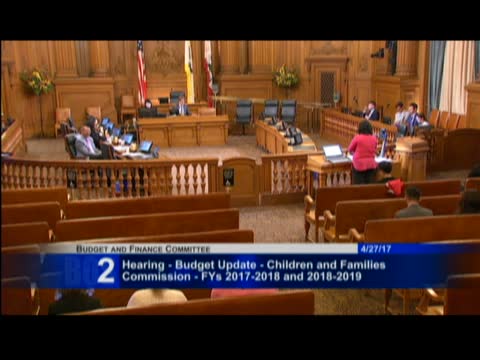
Ingrid Mesquita, representing First 5 (Children and Families Commission), told the committee that state tobacco‑tax revenue (Prop 10) has declined and that First 5 used reserves for one‑time investments; the commission is prioritizing developmental screenings, Quality Rating and Improvement System work, and support for neighborhood family resource centers.
Ingrid Mesquita, of the Children and Families Commission (First 5), outlined the commission's revenue picture and core investments in San Francisco's early childhood system. She said First 5's primary revenue source remains the state tobacco tax under the California Children and Families Act (Proposition 10) and that collections have declined, prompting use of reserves for one‑time programs.
Mesquita said First 5 intends to continue investments that support a birth‑to‑5 system beyond classroom spaces, including a Quality Rating and Improvement System (QRS) to bring common standards to programs, training and professional development accessed annually by about 1,200 early childhood educators, and funding for over 25 neighborhood family resource centers. She highlighted gaps in developmental screening — less than half of incoming kindergartners had a developmental screening — and said First 5 will prioritize hearing, vision and dental screening expansions.
Responding to questions, Mesquita said state legislation to tax e‑cigarettes passed and that some e‑cigarette revenue was projected to flow to Prop 10, but she noted local e‑cigarette receipts are modest (under $200,000 a year). She also said the QRS is a state and county‑level initiative supported by First 5 California and the California Department of Education via grants to counties; those state incentives, she said, do not fully reimburse local costs.
The committee filed the hearing on First 5 without objection.