Get Full Government Meeting Transcripts, Videos, & Alerts Forever!
Get email alerts on the Public Health Budget topic
No spam. Unsubscribe anytime.
Health director outlines $2.1 billion DPH budget, cites EHR and revenue plans
Summary
San Francisco Department of Public Health Director Barbara Garcia presented a $2.1 billion, two‑year budget (FY17–19), flagged revenue maximization through Medi‑Cal, a $373 million 10‑year electronic health record plan, LEAN quality improvement funding, and overtime pressures at Zuckerberg San Francisco General and Laguna Honda.
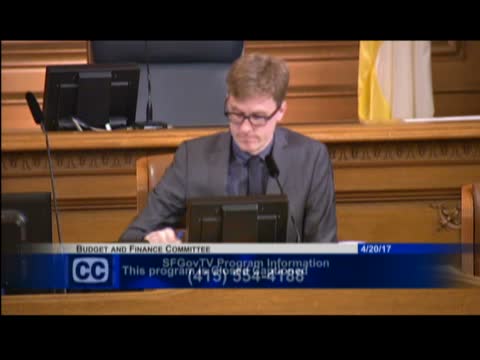
Barbara Garcia, director of the San Francisco Department of Public Health, told the Board’s Budget Committee the department’s proposed two‑year budget totals about $2.1 billion, roughly 21.6 percent of the city’s budget, and includes $711 million in general‑fund support and almost 7,000 budgeted positions. “Our mission is to protect and promote the health of all San Franciscans,” Garcia said as she outlined priorities for revenue generation and delivery‑system stabilization.
Garcia said DPH aims to maximize non‑general‑fund revenue—largely Medi‑Cal reimbursements—proposing new revenue of about $59.2 million for 2017–18 and $53.0 million for 2018–19. She presented a plan to consolidate roughly 60 legacy clinical and billing systems into an enterprise electronic health record, which the department estimates will cost $373 million over 10 years and includes $15 million budgeted for 2018–19. “As we develop our new electronic health record, we’re already planning to do those implementations,” Garcia said.
The presentation described operational investments tied to the opening of the new Zuckerberg San Francisco General (ZSFG) hospital. Garcia said the department budgeted about $9.7 million to stabilize hospital operations and cited higher overtime at ZSFG—roughly $4.5 million above budget—driven by new workflows, increased utilization and staffing lags. Greg Wagner, DPH chief financial officer, told the committee the overtime supplemental (including $750,000 at Laguna Honda) will be funded by reappropriating salary and fringe dollars within the department rather than by seeking new city general‑fund dollars.
Garcia highlighted quality‑improvement efforts through a LEAN program and requested $1.4 million to continue LEAN projects across the department to reduce waste and improve patient experience. She also previewed behavioral‑health expansions, including a 15‑bed Hummingbird Behavioral Health Navigation Center and coordination with a Whole Person Care waiver to improve services for high‑need homeless patients.
Supervisors pressed Garcia on several items during questioning: data collection on sexual orientation and gender identity (required by legislation beginning July 1), use of Early and Periodic Screening, Diagnostic and Treatment (EPSDT) funds to expand youth behavioral health (the department plans to add about $1 million to EPSDT), and the relationship between jail health and mental‑health line items (Garcia estimated jail health at about $30–33 million, with approximately $8–10 million for behavioral health components). Garcia said the department is tracking staffing requirements by state standards and will continue monthly monitoring of payroll and staffing patterns as hospital operations settle.
The committee filed the DPH hearing without objection. The department said it will return with more detailed budget analyses and RFP outcomes for the EHR procurement as those processes advance.