Get Full Government Meeting Transcripts, Videos, & Alerts Forever!
Get email alerts on the Early Childhood Funding topic
No spam. Unsubscribe anytime.
DCYF previews allocation plan, says $3 million in ongoing general‑fund reductions can be absorbed without service cuts
Summary
Department of Children, Youth and Their Families Director Maria Sue told the Budget and Finance Committee the mayor's 3% ongoing general‑fund reduction (about $1M in 2017–18 and $2M ongoing for 2018–19) will be achieved largely by trimming one‑time and unspent items and reallocating growth into grants for community organizations; a final five‑year allocation plan and RFP will return in May.
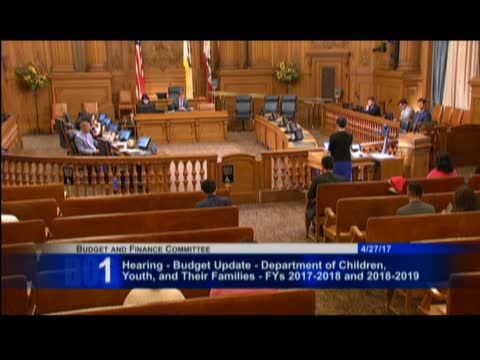
Maria Sue, director of the Department of Children, Youth and Their Families, told the San Francisco Board of Supervisors' Budget and Finance Committee that DCYF will meet the mayor's request for 3% ongoing general‑fund reductions without cutting front‑line services.
She said the requested reductions translate to about $1 million in 2017–18 and $2 million ongoing beginning in 2018–19 and explained most of the savings come from unspent funds and one‑time expenditures rather than program cuts. "We believe that we can make both of these reductions in our budget without impacts to services, and we are able to continue to maintain continuity of care and services for all of our children, youth, and families in the city," she said.
The director previewed a services allocation plan that will guide an upcoming request for proposals (RFP) to fund five years of services. The plan centers equity, trauma‑informed approaches and a results‑based accountability framework. Maria Sue said priority populations include low‑income neighborhoods and groups the department identified as concentrated needs, including African American, Latino and Pacific Islander children, disconnected transitional‑age youth, and children facing barriers such as foster care involvement and English language learner status.
During questioning, Supervisor Norman Yee pressed whether the reductions were cumulative and asked why the revenue slide showed larger decreases than the mayor's 3% guideline. DCYF's staff and CFO Leo Chi said some declines reflected one‑time revenue drops and unspent work orders, and that the department's plan was designed to satisfy the ongoing reduction while preserving program continuity.
A public commenter urged greater investment in 0–5 services, citing a local wait list for subsidized care and research on early brain development. Maria Sue said the department will return in May with the final allocation plan and the RFP that will define funding categories and solicit service providers.
The committee filed the hearing on the DCYF budget without objection; no formal policy action was taken at the meeting.