Get Full Government Meeting Transcripts, Videos, & Alerts Forever!
Get email alerts on the Muni Transit topic
No spam. Unsubscribe anytime.
Supervisors press SFMTA to restore suspended Muni lines as agency outlines phased plan
Summary
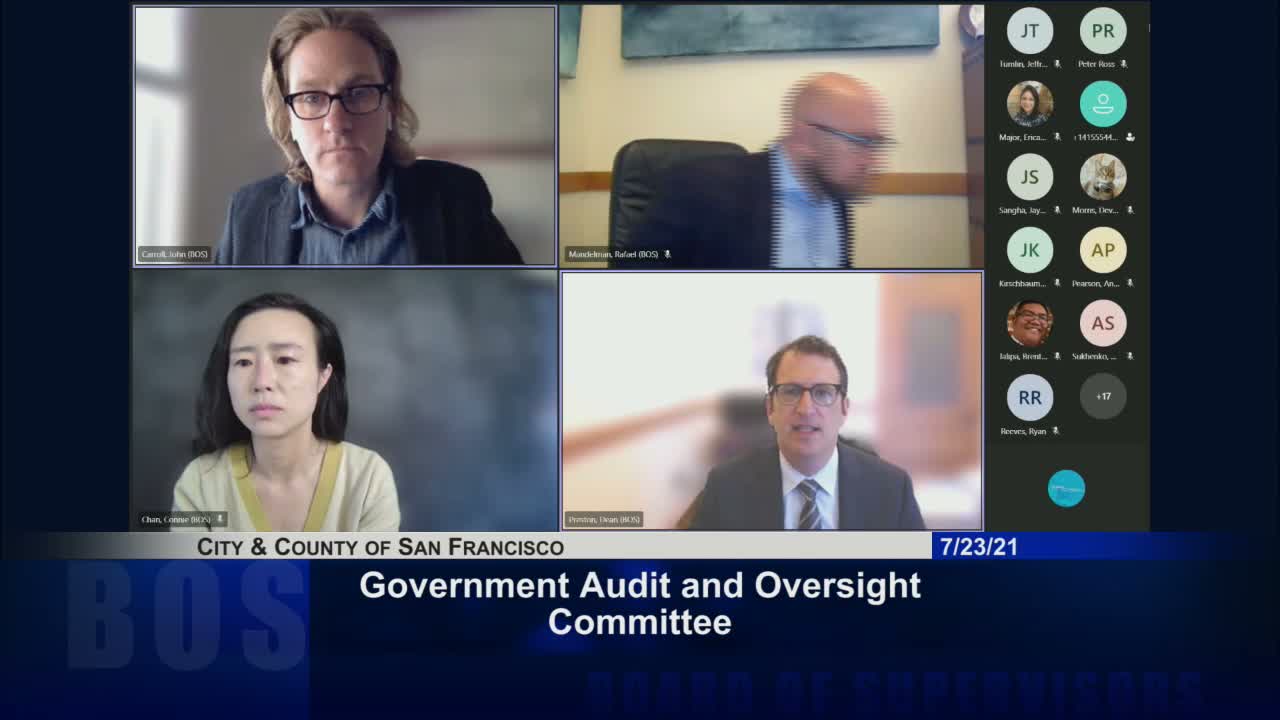
At a July 23 special hearing the Board’s Government Audit & Oversight Committee pressed the SFMTA to set a firm timeline for restoring suspended Muni service. Agency leaders described staffing limits and three recovery scenarios (85%, 100%, 110% service) and said full restoration depends on hiring and funding, not immediate availability of all lines.
Supervisors on the Board of Supervisors’ Government Audit & Oversight Committee pressed the San Francisco Municipal Transportation Agency on July 23 to set a clear, near‑term timetable for returning suspended Muni lines and service hours.
Chair Supervisor Dean Preston, who convened the special hearing, said many lines have been suspended for more than a year and warned extended suspensions risk permanent eliminations. He and Vice Chair Connie Chan sought a date by which SFMTA could restore “100 percent” of pre‑pandemic service and asked the agency to justify its staffing, budget and planning assumptions.
SFMTA Director Jeffrey Tumlin and Transit Director Julie Kirschbaum said the agency is using a scenario planning approach. Their work examines three funding/staffing cases: an 85 percent baseline the agency expects to sustain in the short term, a 100 percent scenario if hiring and revenues permit, and a 110 percent “aspirational” vision the agency says San Francisco needs. Tumlin said hiring is the principal constraint: at current rates of recruitment SFMTA projects reaching full hiring in late 2022 and warned that spending all one‑time federal funds too quickly would risk a fiscal cliff and layoffs in 2023.
Kirschbaum described the practical choices behind the scenarios: restoring every route with slightly less frequency versus concentrating service on a core rapid network with higher frequency and reliability but longer walks for some riders. She said MTA will present three alternatives to the public this fall and called for community engagement to shape tradeoffs.
Supervisors and public speakers repeatedly pressed two themes: (1) the need for a clear, auditable restoration timeline and (2) concerns that a redesign process staffed with outside consultants could bias the outcome away from coverage lines that serve seniors, people with disabilities and historically underserved neighborhoods. Preston singled out consultant Jarrett Walker’s recent posts and prior work as raising concerns that the public process may favor “core” lines over community coverage. SFMTA officials responded that staff lead decisions, not the consultant, and that Jarrett Walker provides technical analytics to frame choices.
Scores of callers in a lengthy public comment period urged immediate restoration of suspended lines — naming the 31 Balboa, 21 Hayes, 6, 47 and others — and warned that reductions have disproportionately harmed older adults, riders with disabilities and lower‑income neighborhoods. Transit unions and operators also urged faster restoration, claiming many operators are willing to work overtime and asking the agency to remove administrative obstacles to staffing.
The committee continued the hearing on the de facto route‑abandonment item and referred the companion resolution urging restoration to the full Board as a committee report for consideration at the July 27 meeting. The committee vote on the resolution was 2–1 (Preston and Chan in favor; Mandelman opposed).