Get Full Government Meeting Transcripts, Videos, & Alerts Forever!
Get email alerts on the Ucsf Research Building topic
No spam. Unsubscribe anytime.
Supervisors advance UCSF ground lease and LDDA for new research building at Zuckerberg San Francisco General
Summary
The committee sent a 75‑year ground lease and LDDA with UCSF forward to the full board (without recommendation) after extensive public comment supporting research co‑location at ZSFG and detailed questions from supervisors about parking, traffic, CEQA mitigations and community outreach.
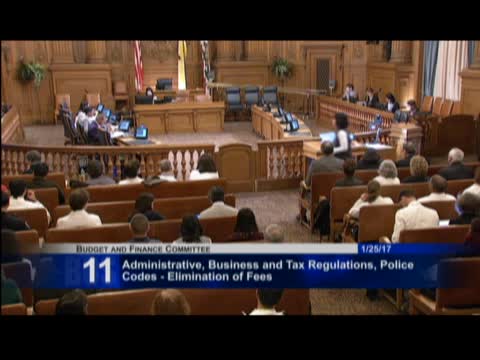
The Budget and Finance Committee on Jan. 31 moved a lease, disposition and development agreement (LDDA) and 75‑year ground lease with the University of California, San Francisco (UCSF) for a new research building at Zuckerberg San Francisco General (ZSFG) forward to the full Board of Supervisors without recommendation, following extensive public comment and detailed questioning from supervisors.
Department of Public Health Director Barbara Garcia and UCSF Vice Dean Sue Carlisle described the 175,000‑square‑foot facility, which will consolidate roughly 800 researchers and provide wet and dry labs (about 75,000 sq ft) and academic/administrative space (about 100,000 sq ft). UCSF will construct the building and pay an annual base rent of $180,000. The parties discussed a $10,000,000 UCSF contribution toward mitigating the 130 parking spaces displaced on the BC lot; controller staff estimated a garage expansion to add ~307 spaces could cost roughly $25 million.
Supervisors pressed university and city staff on community outreach, parking mitigation, transportation demand management (TDM), construction vibration and air‑quality monitoring, and coordination with concurrent Potrero Avenue roadway improvements. UCSF’s environmental coordinator said the EIR studied construction and operational impacts (air quality, greenhouse gases, health risk assessment, and traffic) and that the city and Planning Department were engaged early in the EIR process.
The meeting included extended public testimony from hospital clinicians, researchers, the hospital CEO, and local organizations. Supporters emphasized co‑location’s role in retaining clinicians, sustaining ZSFG’s level‑1 trauma designation and producing research with local public‑health benefits. Opponents in previous venues had raised concerns about traffic, parking, and environmental impacts; supervisors asked UCSF to revisit the $10 million parking contribution and to report back before the full board.
Supervisor Tang moved to send the measure to the full board without recommendation, noting parking mitigation should be flagged for further work; the committee took that motion without objection.
Next steps: The item will appear on the board agenda. UCSF and city staff committed to revisit the parking contribution and to return with updates, and to continue community engagement and coordinated planning with SFMTA and other departments.