Get Full Government Meeting Transcripts, Videos, & Alerts Forever!
Get email alerts on the Labor Prevailing Wage topic
No spam. Unsubscribe anytime.
Board committee continues vote on ordinance to require prevailing wages for special‑event loaders and drivers
Summary
The Budget and Finance Committee heard testimony supporting an ordinance to require prevailing wages for loading, unloading and driving related to high‑production special events on city property, accepted sponsor amendments and continued the item one week for substantive revisions.
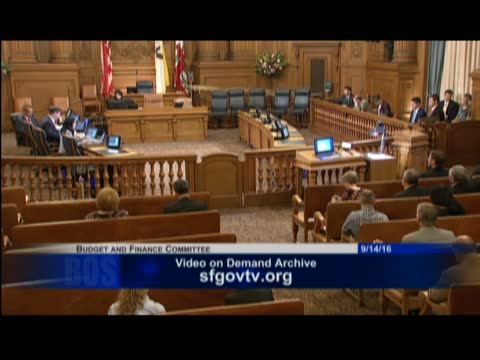
The Budget and Finance Committee on Sept. 14 considered an ordinance sponsored by Supervisor Scott Wiener’s office that would require prevailing wages for workers who load, unload and drive commercial vehicles for certain special events on city property. Andres Power, representing Supervisor Wiener’s office, told the committee the measure is designed to ensure “those folks who are behind the scenes making our great outdoor events the success that they are” receive a fair living wage.
The proposal would expand prevailing‑wage coverage geographically to the entire city but narrow the types of events covered so the requirement applies only to events that already trigger theatrical or trade‑show prevailing‑wage provisions, Power said. He described a two‑step process: the Board would pass an ordinance creating the requirement, then the Office of Labor Standards Enforcement (OLSE) with Civil Service would survey and set specific dollar rates that would return to the Board for approval.
Union representatives urged passage. Joseph Silje, secretary‑treasurer of Teamsters Local 2785, said workers he spoke with at events were paid “far below” the Teamsters’ rates and that a city ordinance is needed to close the gap. Other union speakers stressed workforce safety, training and benefits that accompany union wages.
Committee members asked how enforcement and triggering would work. Power said permit language would identify when loading, unloading or driving work requires prevailing wages and that promoters and subcontractors would be informed via contract and permit documents. An OLSE representative said enforcement is frequently complaint‑driven and can include payroll reviews and on‑site employee interviews; OLSE can also leverage city contracting processes to address violations.
Because the City Attorney concluded the sponsor’s changes were substantive, the committee accepted the amendments and voted to continue the item for one week to allow the sponsor to return with the revised ordinance. The motions to adopt amendments and to continue were made by Supervisor Katie Tang, seconded by Supervisor Yi, and taken without objection.
Next step: the sponsor will refile the amended ordinance and the committee will consider it after the one‑week continuance.