Get Full Government Meeting Transcripts, Videos, & Alerts Forever!
Get email alerts on the Jail Policy topic
No spam. Unsubscribe anytime.
Committee backs ordinance to end revenue generation from incarcerated people
Summary
The committee voted to recommend the "People Over Profits" ordinance that would bar the city from entering contracts allowing it to collect revenue from jail phone calls, commissary markups, or new devices; sponsors said the change protects families and preserves programming funded by inmate welfare funds.
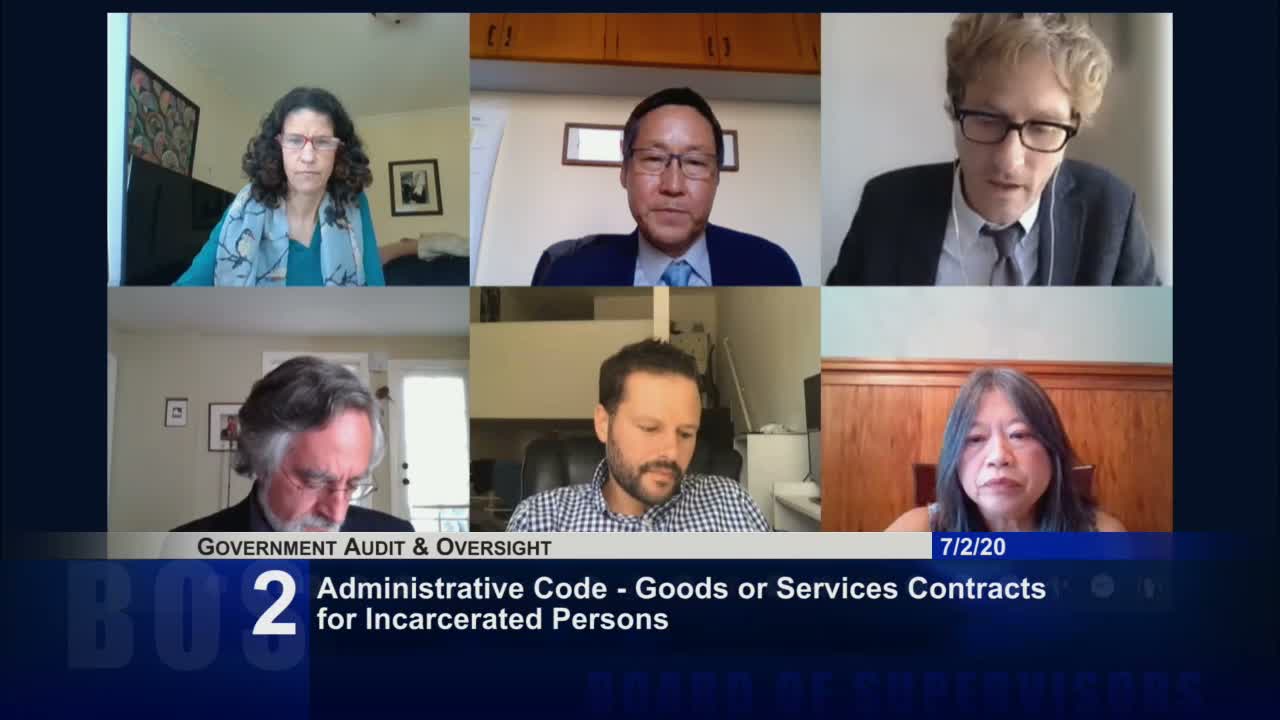
The Government Audit & Oversight Committee advanced an ordinance July 2 that would prohibit the City and County of San Francisco from entering agreements that allow it to collect revenue from incarcerated people or their families for phone calls, commissary purchases, or communications devices.
Supervisor Sandra Lee Feuer, the measure’s sponsor, said the policy builds on reforms that made jail phone calls free last year and aims to make the change permanent and broader. Feuer cited data prepared by the Treasurer’s Office Financial Justice Project estimating the prior system extracted about $1.7 million a year from families and support networks and said commissary markups had been as high as 43%.
Anne Stoldraer of the Financial Justice Project told the committee excessive fees strip money from families and reduce contact between incarcerated people and loved ones — contact that studies link to lower recidivism and improved reentry outcomes.
Public Defender Manu Raju and Sheriff Paul Miyamoto also spoke in support. Raju described the burden on families and gave an example that a 15‑minute call could cost roughly $3; Miyamoto said his office supported the reforms and emphasized the need to maintain programming that was previously funded by commissary revenue.
Supervisor Feuer offered two technical amendments negotiated with the Sheriff’s Office and advocacy groups to (1) preserve funding commitments for programs previously funded by inmate welfare revenues and (2) clarify reporting language about contracts; the committee approved the amendments and recommended the ordinance to the full Board with a positive recommendation.
What comes next: The full Board of Supervisors will consider the ordinance and attendant budget commitments to ensure jail programming remains funded if revenue sources are removed.